About half the people who complete therapy quietly admit they forget what to do the moment real life hits. You leave the session clear… then two days later, your mind is chaos again. How could a short audio check‑in actually make those coping skills stick when it matters?
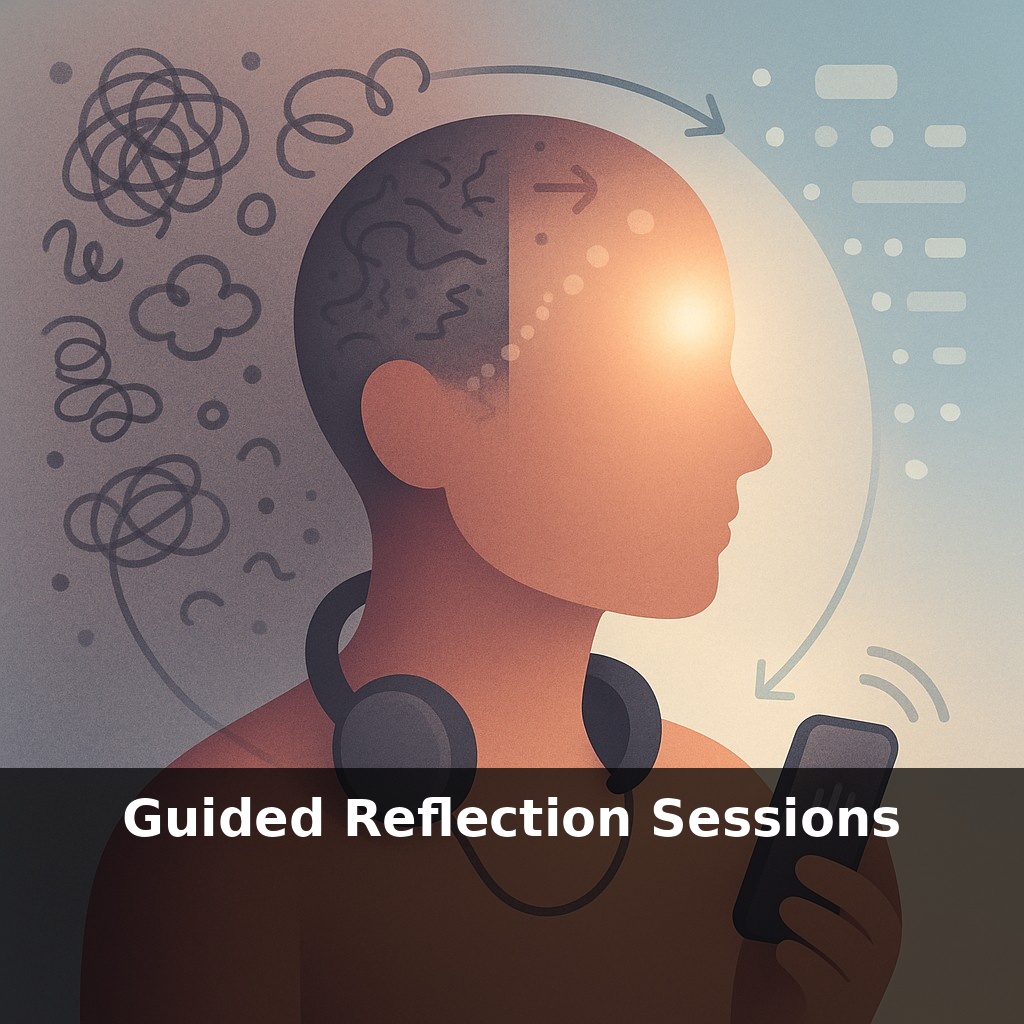
In CBT research, there’s a quiet pattern that doesn’t make headlines: people who *practice* skills between sessions—actually rehearse them in the wild—tend to get better faster and stay better longer. Guided reflection sessions are designed exactly for that tricky in‑between space. Not a full therapy hour, not just a soothing track, but a short, structured walkthrough where you’re coached to notice what your mind is doing *right now* and respond on purpose.
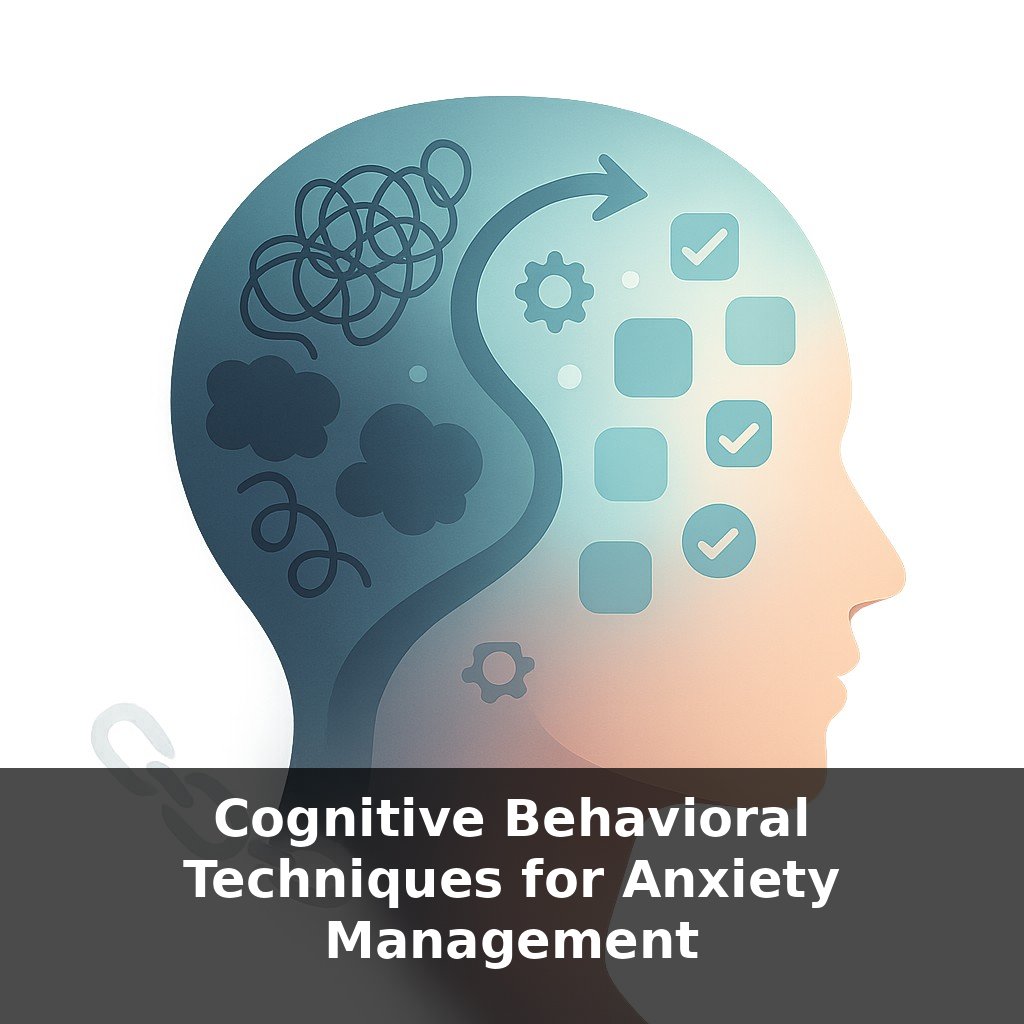
Instead of waiting for the next appointment, you get a sort of “live rehearsal” when anxiety spikes: naming thoughts as they show up, catching the subtle all‑or‑nothing thinking, gently shifting your attention back to the breath or body so your nervous system can settle while you’re learning. Over time, those small, repeated run‑throughs carve a clearer mental path, so in everyday stress—emails, meetings, health worries—you can find your way back to those skills more quickly.
In research labs, these brief practices are more than “nice extras.” They act like focused training blocks where different change mechanisms fire at once: cognitive restructuring as you label a thought, exposure as you stay with a feeling a few seconds longer, and behavioural activation when you choose a tiny, values‑based action right after. Because they’re short, people actually use them—on a commute, during a lunch break, before bed—which means you’re stacking many small reps across the week instead of relying on one big workout in a therapy room. Over time, those micro‑sessions can quietly shift your default responses.
A 10–12‑session CBT course can already move the needle for half of people with generalized anxiety, but those numbers hide an important detail: outcomes climb even higher when people have structured, in‑the‑moment prompts. Adding short, guided reflections has been linked to an extra 10–25% symptom drop in some trials—not because the audios are “stronger therapy,” but because they multiply how often your brain gets to practice the change process.
What’s different here from just “doing homework”? Traditional worksheets ask you to recall last week’s spiral and analyze it. Guided reflections, by contrast, meet you in the *current* moment. You’re cued to notice: *What is my mind saying right now? Where do I feel this in my body? What small step could I take in the next 10 minutes?* That real‑time focus matters, because the brain rewires more efficiently when new responses are paired with the actual cues that usually trigger old habits.
Mindfulness research adds another layer. Even 10 minutes a day, over weeks, has been associated with structural changes in attention and emotion‑regulation circuits. When a reflection intentionally toggles between gentle awareness of the body and specific CBT prompts, you’re not only understanding your patterns—you’re training the attentional “muscle” that lets you stay with discomfort long enough to choose a different response.
Digital tools are starting to harness this. A 2019 trial of a popular meditation app found that a month of brief, guided practices reduced anxiety scores by almost a third. And large‑scale UK data suggest that even remotely delivered, guided CBT materials can approach the impact of in‑person work. The thread running through these findings isn’t magic wording; it’s guided repetition in everyday contexts.
Think of a guided reflection less as a soothing track and more as a scheduled “mental drill”: a short, structured space where your mind is nudged to do, in real time, what you’d like it to do automatically under stress. Over repeated runs, the route becomes more familiar, and the need for external prompts can gradually fade.
A practical way to see this in action is to zoom in on a single, ordinary moment. Say you’re waiting for test results, scrolling your phone. Your chest is tight, your brain is quietly running through worst‑case outcomes, and you’re half‑reading the same sentence over and over. A guided reflection here doesn’t walk you through your whole life story; it might simply ask, “What sentence is your mind shouting right now?” You notice, “Something’s definitely wrong.” Then, “Where does that land in your body?” You realise your jaw is locked, shoulders raised. Next comes, “What’s one kinder, still honest way to phrase this?” or “What tiny thing can you do in the next five minutes that aligns with how you want to handle uncertainty?” Like sketching a small study before painting a landscape, you’re practicing on this one, contained moment so your responses grow more fluid in bigger, messier ones.
As these tools evolve, the most powerful shift may be in *when* support appears, not just how. Guidance could surface like streetlights along a dark road—brief flashes that show the next few metres rather than a full map. Your data trail (with consent) might flag patterns you overlook: Sunday‑night dread, post‑meeting slumps, pre‑bed scrolling spikes. Instead of waiting for crises, reflections could arrive just before familiar bends, nudging subtle course‑corrections that add up over months.
When you treat these practices less like emergency repairs and more like tuning an instrument, your range widens: difficult emails, medical queues, restless nights. Over time you may notice not just fewer anxious storms, but new room for curiosity—testing different choices, adjusting habits, and quietly discovering which small shifts change the whole day.
Start with this tiny habit: When you close the podcast app after listening to a guided reflection session, say out loud one sentence that begins with “The moment that stood out to me was…” and complete it. Then, whisper one short follow-up question to yourself about that moment, starting with “I wonder why…”. Don’t write anything down, don’t overthink it—just these two spoken sentences.