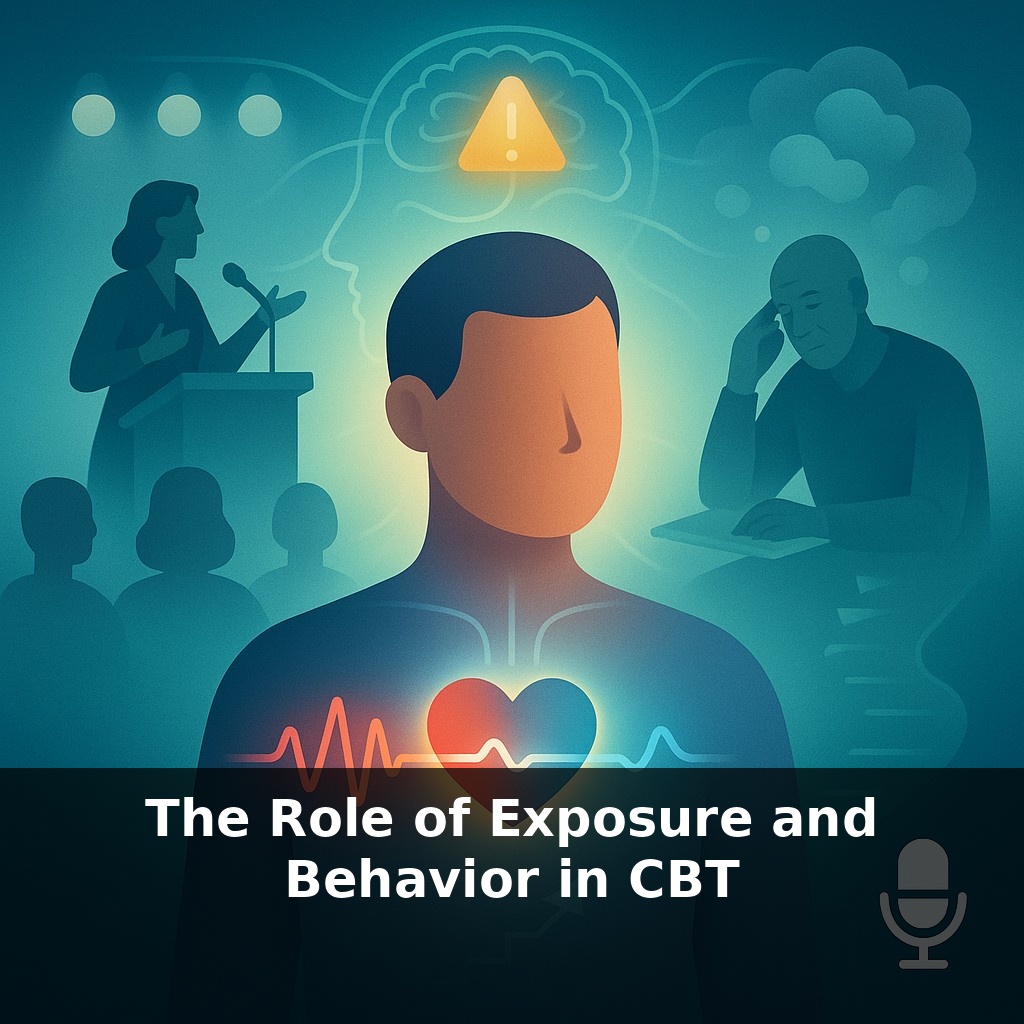
Your brain can learn that a racing heart isn’t an alarm, even while it’s pounding in your chest. A woman with severe public-speaking fear steps on stage. A veteran starts a difficult memory exercise. Both feel terror—yet both are, step by step, training their threat system to stand down.
Across anxiety disorders, one pattern quietly drives symptoms: the more we back away from what scares us, the more powerful the fear becomes. Research on cognitive behavioral therapy shows that what you *do* in the presence of anxiety often matters more than what you *feel*. This is where exposure and behavior change come in—not as brute-force “face your fears” slogans, but as carefully planned experiments in real life.
Think of someone who dreads hospitals yet wants to attend a friend’s surgery, or a person with contamination fears who longs to cook for their family again. In exposure-based CBT, they don’t jump to the hardest step. Instead, they climb a behavioral “ladder,” starting with manageable challenges that gently stretch their comfort zone. Over time, these actions become powerful evidence that anxiety, while loud, is not the sole decision-maker.
In practice, exposure often looks less dramatic than people expect. It might mean answering one more email before rechecking a locked door, leaving the house without a “just in case” item, or letting a difficult memory play like a movie without hitting the mental pause button. These are small, precise shifts in what you *do* when anxiety surges. Over time, the pattern matters more than any single step: instead of organizing life around preventing discomfort, you begin to act in line with what matters—like slowly widening a narrow path back into a walkable road.
In well-designed protocols, two ingredients usually move together: planned contact with what you fear, and deliberate changes in what you do to feel “safe.” The contact alone is rarely enough. What shifts things is staying in the situation *without* relying on the behaviors that quietly teach your brain, “I survived only because of this ritual, reassurance, or escape route.”
Consider three common patterns:
- Someone with contamination worries touches a doorknob, *then* washes “just once, quickly, to be safe.” - A person with health anxiety reads about symptoms but keeps one hand on their smartwatch, checking their pulse. - A trauma survivor starts describing a memory, then rapidly changes the subject whenever emotion rises.
On paper, these look like exposures. In reality, the nervous system is still getting the message: “Danger was real; we escaped in the nick of time.” Therapists call these safety behaviors. They’re understandable, and often subtle, but they block the fuller learning that would occur if you stayed, unprotected, long enough to discover you can cope.
This is why many plans target both the feared cue *and* the usual response. Touch the doorknob and delay washing. Read symptom information and leave your heart rate unmonitored. Tell the memory in the present tense and keep going even when your chest tightens. The goal isn’t toughness for its own sake; it’s to give your mind a clean experiment: “What happens if I don’t do the thing I’m convinced is necessary to stay okay?”
Responsiveness matters too. Some days you might move up a rung on your ladder; other days, the task is repeating a step without adding new precautions. Progress is rarely a straight line. Therapists often track details like how long you stay, how high the fear climbs, what you *don’t* do, and what you notice afterward. Over several trials, new patterns emerge: urges peak and fall, dreaded outcomes don’t materialize, and confidence grows less from feeling calm than from acting effectively while stirred up.
Your challenge this week: choose one mild-to-moderate trigger and one tiny safety behavior you’re willing to tweak. For seven days, when that trigger appears, do the exposure step *and* drop or shrink the safety move—just a little. Maybe leave one text unchecked, skip a single reassurance question, or delay a ritual by two minutes. Each time, briefly note: What did I predict? What actually happened? Which urge was hardest to resist?
Treat this as an experiment in building evidence, not willpower. At the end of the week, look back over your notes. Where did reality differ from your predictions? What did your actions teach you that thinking never quite could?
A man with social worries starts by ordering coffee without extra chit-chat, then gradually asks the barista a simple question, then later joins a brief work huddle instead of lurking by the edge. None of these moments look heroic from the outside, but together they form a quiet series of tests: “Can I let others see me, without perfect lines prepared?” A teen recovering from panic begins by sitting on the bus one stop longer, then riding without headphones, then choosing a crowded seat on purpose. Each step nudges them toward a different story about what bodily discomfort means. In another case, a nurse returning after burnout walks past the nurses’ station without checking the chart yet again, then allows a minor mistake to be addressed without apologizing three times. Exposure here isn’t just about fear—it’s about learning a new role. In that sense, it’s closer to sketching the first rough outlines of a painting: each imperfect stroke makes the final picture easier to see.
Next-wave exposure work may feel less like “going to therapy” and more like carrying a smart coach in your pocket. Instead of static worksheets, you could step into a brief VR scene on your lunch break while sensors quietly track your stress curve, then auto-adjust the next level. Care might look more like training for a hike: short, repeated climbs with a guide updating the route as you go, rather than a single, long appointment on a distant mountain.
Over time, many people find that these experiments spill into places they never planned: booking flights they once avoided, raising a tough issue with a partner, walking into a gym after years away. Progress can be uneven, like learning a new instrument—clumsy at first, then gradually more fluid as your “behavioral playlist” expands and old fear tracks lose volume.
To go deeper, here are 3 next steps: (1) Read David Clark & Aaron Beck’s “Cognitive Therapy of Anxiety Disorders” and complete the exposure hierarchy worksheet in Chapter 9 specifically for a current feared situation, then schedule 3 graded exposures into your calendar for this week. (2) Download and use the free “CBT-i Coach” or “WorryTime”–style app to practice response prevention by logging your urges to safety-seek (reassurance, checking, avoiding) and deliberately delaying or dropping just one of those behaviors per day. (3) Watch a full case demonstration of exposure with response prevention (e.g., from the Association for Behavioral and Cognitive Therapies’ YouTube channel) and pause at each therapist question to write down exactly how you would answer if you were the client, then compare your answers to the client’s and note where your safety behaviors would show up.