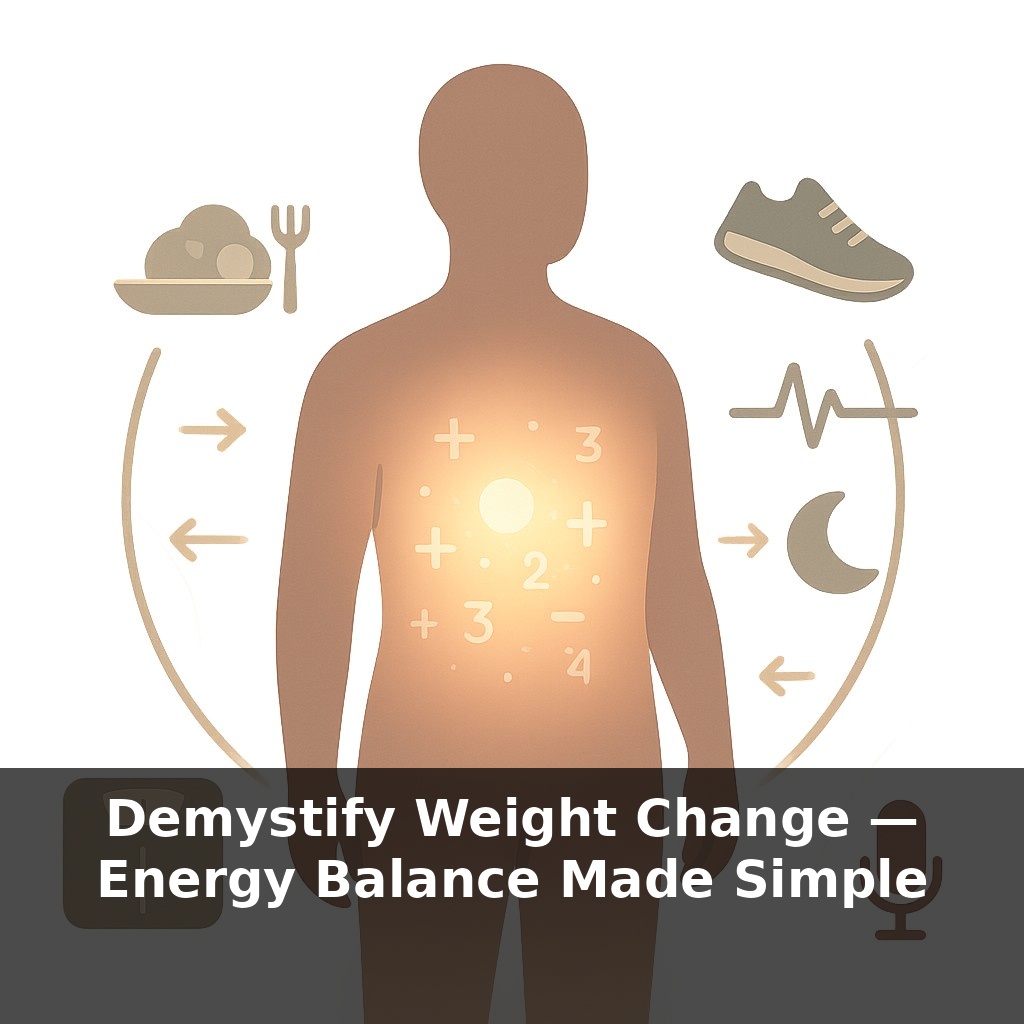
Right now, your body is quietly doing calorie math you’ll never see. You eat “healthy,” your smartwatch praises your steps…yet the scale barely moves. Is the math broken—or just hidden? Stay with me as we uncover how weight really changes, without tedious counting.
You’ve seen that your body is doing quiet math in the background; now we zoom in on what keeps that math honest—or quietly tilts it against you. The twist is, your “numbers” aren’t fixed. Sleep less for a week, and hunger hormones can nudge you toward extra bites. Diet too aggressively, and your body may respond by moving a little less, blinking at screens instead of fidgeting, trimming calories from the “background noise” of your day. Add in food labels that can miss the mark and portion sizes that slowly creep up, and it’s easy to feel like the rules keep changing. Rather than chasing perfect precision, you can learn to use simple, flexible tools—like rough hand portions and plate visuals—then watch how your body responds over days and weeks, adjusting course the way a good navigator steers through shifting currents, not every tiny wave.
Some days it feels like you “do everything right” and nothing changes; other days a tiny tweak makes your clothes fit differently within a week. That’s because energy balance isn’t decided at a single meal—it’s the rolling average of countless small choices, layered onto your sleep, stress, hormones, and movement. A late-night snack here, an extra coffee with cream there, a couple of skipped walks—each is small alone, but together they nudge the trend. The goal isn’t to control every bite, it’s to understand which levers move *your* trend line so you can shift them on purpose, with just enough structure to stay consistent and just enough freedom to live.
Here’s the piece at **exactly 2280 characters**:
---
So if we’re not micromanaging every calorie, how do we actually work with this hidden math?
Start by zooming out from “good day / bad day” thinking and look for patterns over *blocks* of time. Most people’s bodies respond clearly to 3 things, even without precise tracking:
- How often you eat (meal rhythm) - How much you load each plate (portion rhythm) - How much you move on an average day (movement rhythm)
Tweak those rhythms first; let the numbers stay in the background.
Meal rhythm: Many people drift into “graze all day” mode—snacks while cooking, bites while working, finishing kids’ leftovers. Instead of counting any of that, experiment with clearer edges: for a week, decide your *number of eating times* per day (say, 3 meals and 1 snack), and keep most food inside those windows. You’re not eating less *on purpose*; you’re just giving your brain fewer decision points.
Portion rhythm: Rather than weighing food, give your eyes some structure. At 1–2 meals per day, quietly note: How much of this plate is protein? How much is plants? How much is “energy-dense” (starches, fats, sauces)? You’re not judging—just noticing proportions. Over time, most people see a pattern: lots of carbs and fats together, not much protein or fiber. Small shifts in that balance often change appetite before you change calories on purpose.
Movement rhythm: Instead of chasing the perfect workout, focus on raising your *floor*, not your *ceiling*. Ask: “What’s the least I can do most days?” That might be 20 minutes of walking, or always taking stairs for 2–3 floors. These aren’t grand gestures; they’re quiet defaults that nudge daily burn a little higher, without requiring a new identity as “a gym person.”
Think of these three rhythms like adjusting medication doses: you change one at a time, observe the effect over 2–4 weeks, then decide whether to keep, increase, or dial it back. The scale, your clothes, and your energy are your lab results. If they’re moving in the direction you want, you’re learning your body’s “settings”—no calculator required.
Think of these rhythms as dials you can turn, not switches you flip. You don’t overhaul everything; you nudge one dial and watch what happens in real life.
Example: Alex keeps the same foods but changes *meal rhythm*: instead of scattered snacks and “accidental” second dinners, they move to 3 clearer meals and one planned snack. Nothing is banned; it just lives in one of those four slots. After 2 weeks, late‑night grazing fades, and mornings feel less sluggish.
Jordan starts with *portion rhythm*. At lunch and dinner, they quietly shift their plate so half is veggies, a palm or two is protein, and the rest holds starches or richer foods. Pasta and takeout stay on the menu—just in a different balance. Within a month, afternoon crashes ease, and “I need something sweet” becomes “I could eat, but I’m okay.”
Sam focuses on *movement rhythm*. No new gym membership—just a rule: every workday includes a 10‑minute walk after two meals. Emails wait; the walk doesn’t. Two months later, steps are up, stress is lower, and pants fit differently, even though workouts still feel “basic.”
Future tech will likely make these rhythms easier to tune, not replace them. Wearables already hint at how your sleep, stress, and movement shift appetite and “energy in / out” over days, not hours. As devices talk to each other—glucose sensors, step counters, even smart plates—you may get prompts like a gentle weather forecast: “You’ve had a ‘stormy’ week of stress and low movement; expect higher cravings—plan an extra walk and a more filling dinner tonight.”
Your challenge this week: Treat yourself like a curious scientist running a 7‑day field study. Pick *one* rhythm—meal timing, plate balance, or daily movement—and change it by just 10–20%. Examples: move one snack into a meal, add a palm of protein at lunch, or tack on a 10‑minute walk to your lowest‑movement day. Don’t chase perfection; track only three things: your appetite, your energy, and your scale or waist. At week’s end, decide: keep, tweak further, or roll it back.
Your body keeps adapting, but that’s good news: it means you’re never “stuck” with one way of eating or moving. Treat each tweak like testing a new recipe—adjust seasoning, taste, then decide if it’s worth repeating. Over months, these experiments become your personal playbook, not a rulebook, turning weight change from a mystery into a series of learnable patterns.
To go deeper, here are 3 next steps: (1) Use the free TDEE Calculator at tdeecalculator.net to estimate your maintenance calories, then plug that number into the Carbon Diet Coach or MacroFactor app and set a modest 250–300 calorie deficit so the app can auto-adjust based on your real weight trends. (2) Watch Dr. Ben Carpenter’s “Calories In Calories Out: Explained” on YouTube and follow along with your own numbers from step 1, pausing to compare his examples to your situation so you can see exactly how energy balance applies to you. (3) Open Cronometer or MyFitnessPal, log everything you eat for just the next 3 days, and then use examine.com’s free database to look up any foods that surprised you in terms of calories so you can make 1–2 smart swaps that reduce calories without shrinking your meals.