Most people could hit their ideal protein target each day without a single scoop of powder—yet they’re convinced it’s impossible. You grab breakfast on the go, lunch at your desk, dinner half-distracted. Somewhere in there, your protein needs *could* be met… but probably aren’t.
Here’s the twist: it’s usually not *amount* that trips people up—it’s *distribution* and *default habits*. Many days look like this: a low‑protein breakfast that’s basically dessert in disguise, a middling lunch, then a “protein hero” dinner trying to make up the difference. That’s like watering a plant once with a fire hose instead of giving it steady sips across the day—messy, inefficient, and surprisingly unsatisfying.
We’re going to zoom in on the everyday choices that quietly drain protein from your plate: the grab‑and‑go breakfasts, the car‑snack culture, the “just carbs” sides. Then we’ll flip them—using things you can find in a normal supermarket, on a busy schedule, without tracking every gram.
By the end of this episode, you’ll see how a few small swaps at *each* meal can add up to hitting your target almost on autopilot.
Think about how most days blur together: same café order, same “safe” lunch, same late‑night nibbling. Those patterns quietly decide whether you ever reach that 1.2–1.6 g/kg sweet spot. The good news? You don’t need to overhaul your life or build Instagram‑ready meal prep towers. You just need a few anchor foods that reliably bring 20–35 g of protein whenever they show up, the way a favorite jacket reliably keeps you warm. We’ll map out what those anchors look like at breakfast, lunch, dinner, and snacks, so your routine starts doing the heavy lifting for you.
Here’s where we turn those patterns into numbers you can actually use. Start by picking a simple target per meal instead of obsessing over the day: most adults do well aiming for roughly 25–35 g at breakfast, lunch, and dinner, plus 10–20 g once or twice between. That usually gets you into the 1.2–1.6 g/kg range without math homework.
The easiest way to do this is to decide what will *carry* the protein at each meal, then build around it. Think in units:
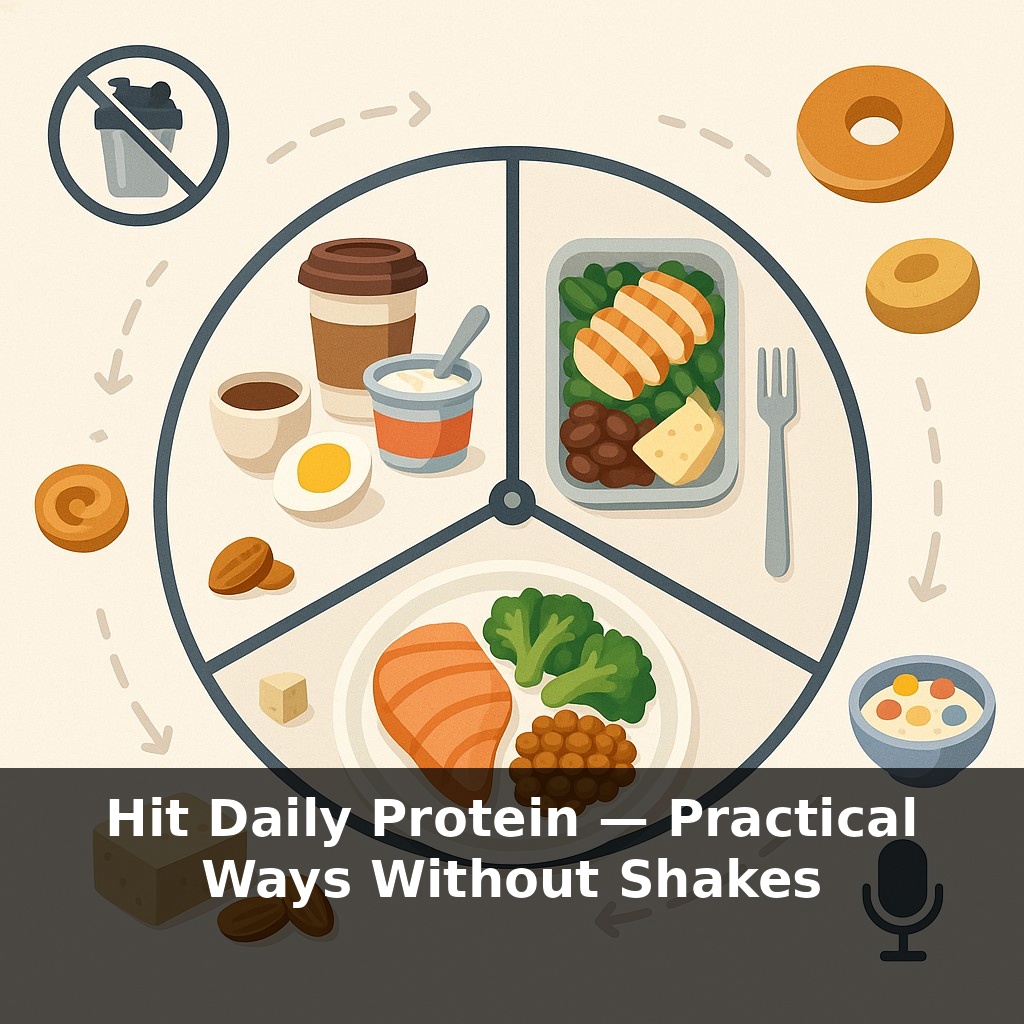
- Morning “blocks”: - 3 eggs ≈ 18 g - ¾–1 cup Greek yogurt ≈ 17–23 g - ½ cup cottage cheese ≈ 12–14 g Combine any two and you’re usually past 25 g before you even add toast, fruit, or coffee.
- Midday “blocks”: - Palm‑sized piece of chicken, turkey, or tofu (about 3–4 oz cooked) ≈ 20–30 g - 1 cup cooked beans or lentils ≈ 15–18 g - 1 can tuna or salmon (3–4 oz) ≈ 20–25 g Add a slice of cheese, some edamame, or thick hummus and your usual salad or wrap quietly turns “high protein.”
- Evening “blocks”: - Hand‑sized fillet of fish ≈ 25–30 g - 4–5 oz lean meat or firm tofu ≈ 30–35 g - 1½ cups lentil or chickpea pasta ≈ 20–25 g Round out with grains like quinoa or higher‑protein breads and you’re often over the line without trying.
Snacks are where many people accidentally drift to pure sugar or pure fat. Swap just one of those for something that reliably brings 10–20 g:
- ¾ cup Greek yogurt with berries - 2 cheese sticks and a piece of fruit - Roasted chickpeas or edamame - Peanut butter on whole‑grain toast
Notice none of this requires weighing food. Your hand is an underrated measuring tool: a palm or deck‑of‑cards sized piece of meat or tofu is usually around 20–25 g, a cupped hand of cooked beans 8–10 g, a thumb of hard cheese 5–7 g. Over a day, those “handfuls” add up quickly.
Think of it like adjusting medication timing rather than raising the dose: you’re not cramming more and more protein into one sitting, you’re spacing reliable amounts across the whole day so your body can actually use what you give it.
Think of your day less as “three meals” and more as a series of protein “checkpoints” you’re trying to clear. Each checkpoint is a chance to quietly stack another 20–30 g without drama. For example, if breakfast is usually all drinkable—coffee, juice, maybe a smoothie—try making *one* thing chewable and protein‑dense: a microwave egg mug, a yogurt bowl, or leftover chicken folded into a tortilla.
Lunch can work the same way. Take whatever you already eat and ask, “What could I tuck in *or* swap that adds at least 10 g?” A slice of deli turkey in a grilled cheese, half a cup of beans tossed into instant soup, extra tofu in a stir‑fry order. At dinner, treat protein like you would the weather forecast: plan around it first, then fill in everything else. Decide on salmon, lentil chili, or tofu curry *before* you think about rice, bread, or dessert, and the rest of the plate tends to fall into place.
Food manufacturers are already quietly turning your grocery aisle into a higher‑protein landscape: breads with lentil flour, cereals boosted with beans, even instant noodles enriched with egg whites. As crops are bred to pack in more amino acids, “normal” pantry staples may start pulling the weight that shakes do now. Think of it like a weather shift: instead of rare protein “storms,” you’ll live in a steady drizzle that keeps your daily total topped up with almost no planning.
Treat this like tuning a radio: once you’ve nudged each meal toward a clearer “signal,” you can play with the volume. Some days you’ll naturally land lower, others higher—both are fine. Over time, you may notice steadier energy, fewer “I need sugar now” moments, and better recovery, even if nothing else about your routine looks dramatic from the outside.
To go deeper, here are 3 next steps: 1) Use the Cronometer or MacroFactor app to plug in your bodyweight and set a concrete daily protein target (e.g., 110–130g), then pre-log tomorrow’s meals built around eggs, Greek yogurt, chicken thigh, and beans/lentils so you can see exactly how you’ll hit that number without shakes. 2) Grab the “High-Protein Cookbook for Beginners” by Jennifer White or “The High-Protein Vegetarian Cookbook” and pick 2–3 recipes that match what you actually like (for example, a Greek-yogurt breakfast bowl and a one-pan chicken-and-beans dinner) and add the ingredients to your grocery app today. 3) Bookmark the website BudgetBytes.com and search “high protein” — choose two easy batch-cook recipes, cook one this week (say, a turkey chili or lentil stew), then portion it into 3–4 containers so weekday you already have a protein-focused meal ready to go.