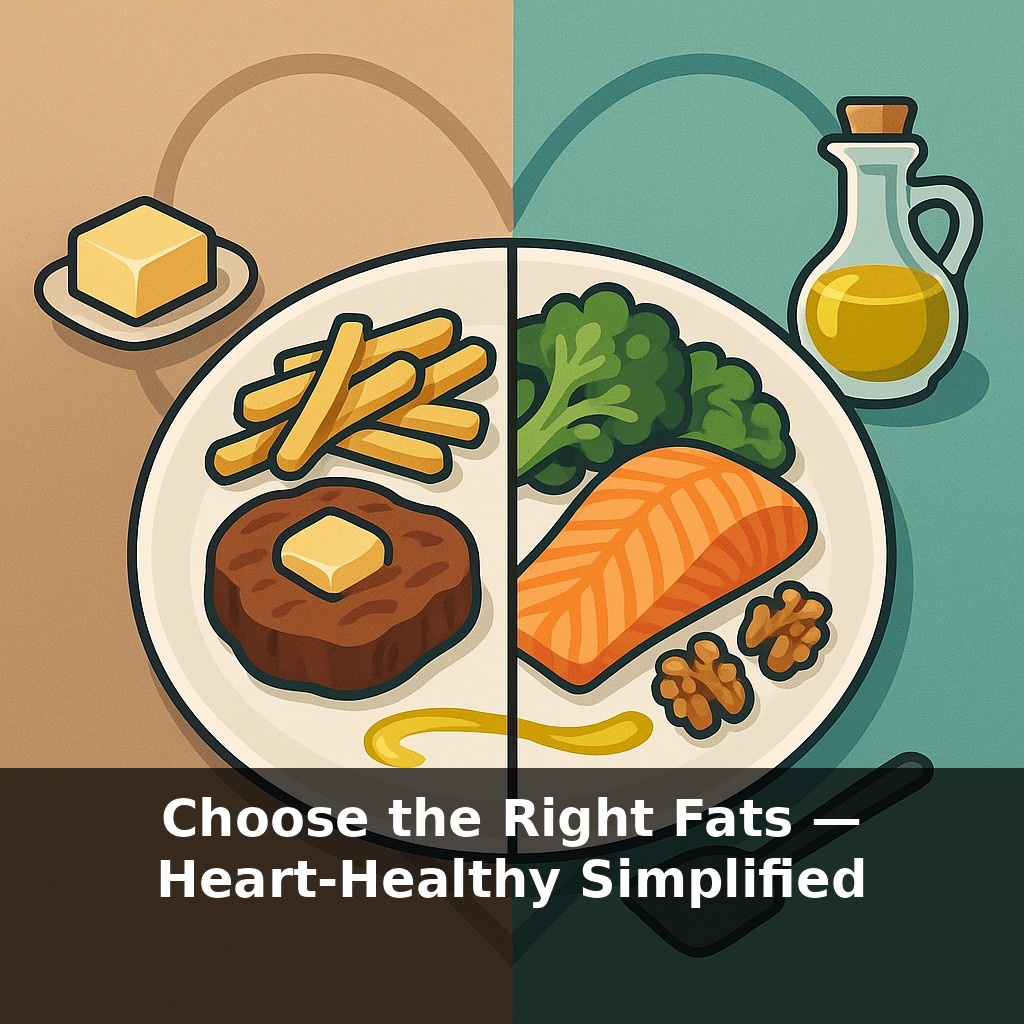
Your next bite of fat could nudge your heart toward danger—or protection—without changing your calories at all. One dinner is buttery steak and fries, another is salmon with olive oil and walnuts. Same fullness, different fats. Which menu is quietly reshaping your arteries?
A small tweak in the pan can matter as much as a big change on your plate. You already know fat type matters more than fat calories; now we’ll zoom in on the everyday crossroads where those choices actually happen. Think of moments like cracking eggs into a skillet, grabbing a snack between meetings, or dressing a salad on autopilot. Those tiny decisions quietly decide whether your day leans more buttery, processed, and rigid, or more fluid, nutty, and plant-based.
We’re not chasing perfection or memorizing chemistry charts here. Instead, you’ll learn which fats to feature, which to shrink, and where omega-3s can slip into your week without a full menu overhaul. By the end, you’ll be able to scan your usual meals and say, “Swap this for that,” turning familiar dishes into heart-friendlier versions that still taste like your food, not a nutrition project.
That zoomed-out view is useful, but decisions don’t live in nutrition guidelines—they live in moments of habit. You’re spreading something on toast while half-awake, choosing a dip at a party, or scanning a menu before a work lunch. In real life, labels blur: “plant-based” shows up on coconut desserts, “keto-friendly” next to bacon, “light” on oils you’ve never heard of. It’s less about memorizing rules and more about spotting patterns hiding in plain sight. In this episode, we’ll walk through common crossroads—breakfast, snacks, eating out, and cooking—so you can quietly tilt each one toward better long-term health.
The easiest place to start is with the fats you use over and over without thinking—your “default settings.” Change those, and you upgrade dozens of meals a week without adding work.
Begin with your cooking fat. If butter or coconut oil automatically hits the pan, try keeping one bottle of extra-virgin olive oil on the counter and using it for anything you’d normally sauté or roast. That single change turns scrambled eggs, vegetables, and sheet-pan dinners into steady sources of heart-supportive fat. For high-heat searing, rotate in canola, avocado, or peanut oil rather than reaching for shortening or generic “vegetable oil blend,” which often hides more processed, less stable options.
Next, look at what you spread and drizzle. Margarines have evolved, but some still hide partially hydrogenated oils in fine print, so check the ingredient list rather than front-label promises. A soft, tub-style spread made from oils like canola or olive usually beats stick forms. On toast or sandwiches, mashed avocado, hummus, or nut butters can stand in for mayo or cheese more often than you might expect, adding flavor plus a better fat profile.
Snacks are another quiet lever. Chips and pastries are convenient precisely because they’re everywhere, but so are roasted nuts, seeds, and trail mixes that list just nuts, seeds, and salt. A small container of walnuts, almonds, or pistachios in your bag or desk drawer turns “I’m starving, I’ll grab whatever’s here” into a more predictable choice. If you like something crunchy with lunch, try half your usual chips plus a handful of nuts, then gradually let the nuts take over the plate.
Dining out, scan menus with one simple question: “Where’s the oil, and where’s the solid fat?” Words like crispy, battered, or stuffed usually signal deeper frying or heavy dairy; baked, grilled, or broiled dishes more often lean on oils, herbs, and spices. You don’t need to interrogate the kitchen—small requests like “Can you cook that in olive or canola oil instead of butter?” or “Dressing on the side, please” can gently shift the balance on your plate.
Think of these tweaks like changing the “house seasoning” in your kitchen: you’re not cooking different meals, just flavoring them with fats that better support your long-term health.
Think about your day as a series of “slots” where fat sneaks in: your coffee, your crunch, your comfort food. Each slot can quietly shift from rigid to flexible without feeling like a diet.
Morning: Instead of loading your coffee with flavored creamer, try half-and-half the first week, then a splash of unsweetened soy or oat milk the next. You’re not giving up coffee—you’re just changing the supporting cast.
Lunch: That side of fries? Trade it once or twice a week for a cup of bean soup or a small side salad dressed with a simple oil-and-vinegar mix. Same salty, satisfying vibe; very different long-term impact.
Afternoon: When the vending machine calls, answer it with your own backup plan: a small bag of trail mix you portioned yourself. Aim for more nuts and seeds than chocolate or candy pieces.
Dinner: Love creamy sauces? Stir a spoonful of pesto into warm pasta instead of using a heavy cream sauce, or finish soup with a swirl of olive oil and herbs rather than cheese. Tiny edits, big pattern shift.
As food tech evolves, “better fat” might become the quiet default the way seat belts did in cars—built in, not bolted on later. Algae-based oils, high-oleic seeds, and smarter frying oils could make everyday meals a bit more protective without changing how they taste. Apps may soon scan your grocery cart and flag which swaps fit your genes and microbiome. Policy and labeling shifts could nudge manufacturers too, so each small choice you make today helps steer that larger system.
Each tweak is like nudging a compass needle; one degree off, and a month from now you’re eating on a different map. As you experiment, notice side benefits: steadier energy, fewer “hangry” crashes, meals that satisfy without feeling heavy. You’re not chasing a perfect menu, just learning which small switches give you the biggest return.
To go deeper, here are 3 next steps: 1) Use the free app Cronometer or MyFitnessPal to log one full day of eating and specifically track grams of saturated fat vs. unsaturated fat, then experiment with swapping just two items (e.g., butter → extra-virgin olive oil, fatty red meat → salmon) tomorrow. 2) Watch the short video series from the American Heart Association on “Fats 101” and download their “Heart-Check Certified Foods” list so you can pick 2–3 heart-healthy oils (like canola, olive, or avocado oil) and nuts/seeds to keep stocked at home. 3) Grab a heart-healthy cookbook like “The Complete Mediterranean Cookbook” (America’s Test Kitchen) and pick one recipe this week that uses olive oil, nuts, and fatty fish, then save it as a “go-to” meal in your phone so it’s easy to repeat on busy nights.