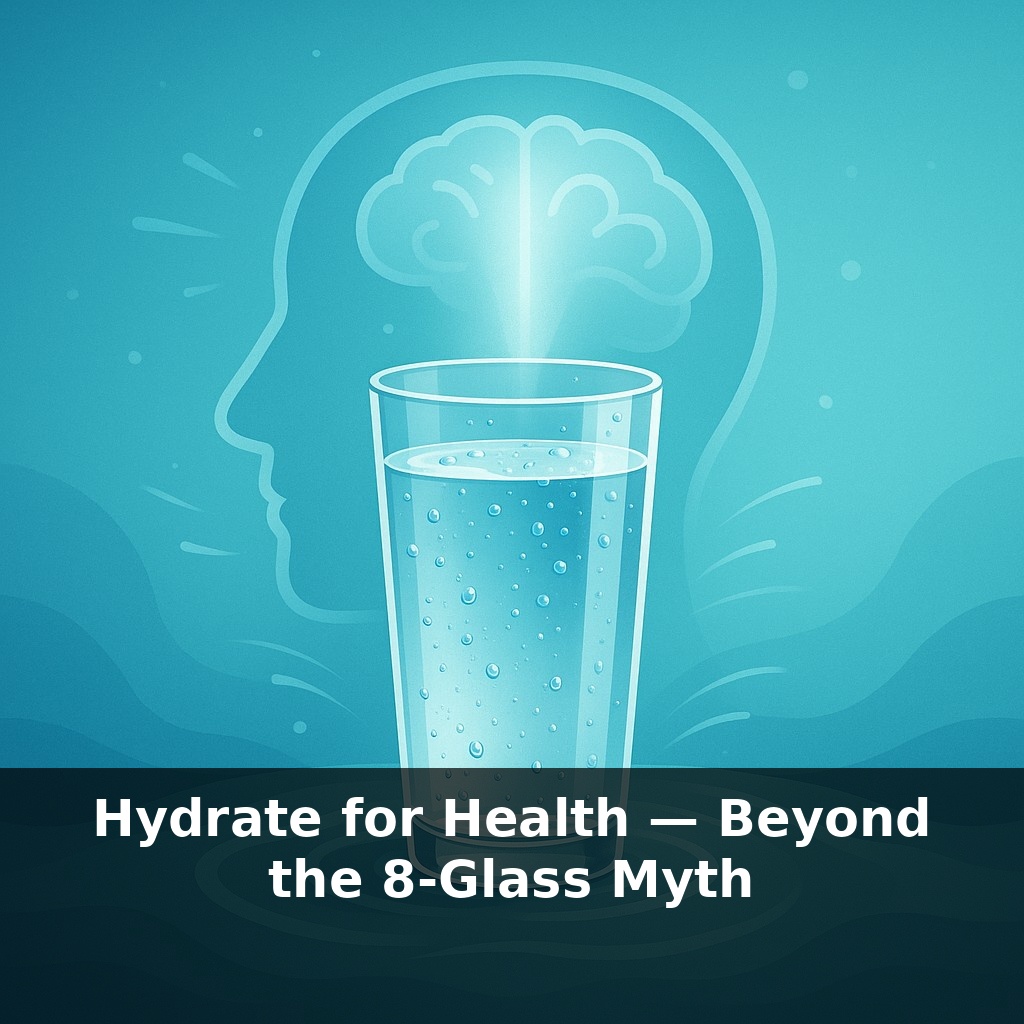
Right now, your brain might be running slower than it should be—simply because you’re a single glass of water behind. You’re not thirsty, you feel “fine,” and yet your focus, mood, and reaction time can all be dulled… long before your mouth ever feels dry.
Experts can’t agree on a single “right” number of daily glasses because your body isn’t following a script—it’s responding to constant plot twists. A hot commute, a salty lunch, a hard workout, a poor night’s sleep, even a stressful meeting can quietly shift how much water you actually need. Two people sitting side by side, drinking from identical bottles, might have wildly different hydration status by evening.
Think of your daily routine like a playlist that keeps changing tempo. Some tracks are slow and easy—desk work, cool room, balanced meals. Others spike the intensity—spin class, spicy takeout, back‑to‑back calls. Your water needs rise and fall with those tempo changes, not with the clock or a printed chart. In this episode, we’ll zoom in on those real‑world variables so your intake can finally match your actual life, instead of an outdated one‑size‑fits‑all rule.
Some of those “plot twists” are obvious—exercise, hot weather, long meetings. Others are sneaky. High‑protein meals pull extra water into digestion. A salty restaurant dinner can leave you heavier on the scale but effectively “drier” on the inside. Even air‑conditioned offices and airplane cabins silently wick fluid away with low humidity. Medications, menstrual phase, and illnesses that change breathing rate or body temperature can also nudge your needs up or down. Instead of chasing a fixed number, we’ll map how these shifts show up in your day so your intake can flex with them in real time.
Skip the mug‑counting and bottle‑tallying for a moment and look at how your body actually communicates. You already have a built‑in “dashboard”—you’ve just been trained to ignore it in favor of the 8‑glass slogan.
Start with thirst. It doesn’t mean you’ve “failed”; it’s your first nudge, not a crisis alarm. Most people feel it around a 1 % loss of body mass—well before serious trouble. The trick is timing: if you routinely delay that first sip until late morning, or always need a huge drink with dinner, that pattern says more than any total ounces calculation.
Next, check your urine. You don’t need a color chart in your pocket, but you can use a simple rule: aim for pale‑straw most of the day. Darker after a workout or first thing in the morning is expected; staying dark through the afternoon is your cue that you’re running behind. Crystal‑clear, all day long? That can mean you’re overshooting and constantly flushing, which isn’t a goal either.
Body weight adds another quiet data point. If you weigh yourself under similar conditions—say, before breakfast, a few times per week—you’ll start to see how much you swing after longer training sessions, hot days, or big evenings out. Dropping more than about 1–2 % from your usual baseline by the end of a workout usually means you didn’t replace enough fluid while you were moving.
Now layer in what you drink. Plain water works, but it’s not the only player. Coffee and tea, once you’re used to them, mostly count toward hydration. Milk, smoothies, broth, watery fruits and vegetables, even yogurt and oats cooked with extra liquid all push your total up. Very sugary drinks, or heavy alcohol, can pull the other way by dragging more water out with them.
During longer bouts of exercise—especially in heat—you’re not just losing water; you’re shedding sodium and other electrolytes in sweat. In those situations, endlessly refilling with plain water can leave you light‑headed and bloated rather than refreshed. A pinch of salt in food, or an appropriate sports drink for sessions stretching past an hour, keeps replacement closer to what you’re actually losing.
Think of how you plan a meal: you don’t just count “plates,” you look at what’s actually on them. Hydration works the same way when you zoom in on *where* your fluids are coming from and *when* you use them most.
Start with timing. Someone who lifts at 6 a.m. and someone who plays pickup soccer at 8 p.m. will benefit from very different fluid patterns, even if their total intake by bedtime is identical. Front‑loading a bit before usual “thirsty moments” (a long commute, a recurring afternoon workout, a nightly glass of wine) can keep you from seesawing between dry and overfull.
Then, look at the mix. A bowl of soup, a big salad, or fruit‑heavy snacks can quietly cover a surprising share of your needs, while a dry, salty snack run may nudge them higher without adding much liquid at all. Training hard? That’s when adding some sodium on purpose—via food or a sports drink—starts to matter more, especially if you’re naturally “salty” when you sweat.
Workplaces and cities will eventually treat hydration like air quality—monitored, adjusted, and reported in real time. Smart bottles may sync with wearables to notice when your heart rate climbs faster than usual in heat and nudge you earlier, not just “more.” Heat‑resilient design—shaded bus stops, cooled warehouse zones, better break schedules—will matter as much as what’s in your cup. The frontier won’t be hitting a quota; it’ll be staying adaptable as your environment keeps shifting.
Your “ideal” intake won’t be a single number; it will look more like a playlist that shifts with seasons, work stress, and training cycles. As you notice those shifts, you can tweak your drinks the way a cook adjusts seasoning—tasting, adjusting, tasting again—until your energy, mood, and performance quietly line up with what your body’s been asking for all along.
Start with this tiny habit: When you first open your eyes in the morning, take one slow breath and drink 3–4 sips of water before you look at your phone. Then, every time you brush your teeth, park a glass or bottle of water right next to the sink and take just 2–3 mindful sips before you walk away. At lunch, before your first bite, pause and take 3 sips of water to “pre-hydrate” your digestion. If you’re working at a desk, every time you hit “send” on an email, reward yourself with 1–2 sips from a bottle that has a pinch of electrolytes or a squeeze of citrus, just like they suggested for better absorption.