About half of recreational runners are injured each year—not from training too hard, but from resting too little. You finish a workout, feel strong, and plan to “keep the streak alive”… but that quiet voice saying “take a day off” might be the smartest coach you have.
You know that satisfying post-workout buzz, when your legs are a little shaky but your brain is on a high? That’s the moment most people think, “I’m getting fitter right now.” But biologically, the real magic hasn’t started yet. During the workout, you’re mostly creating controlled damage: tiny muscle tears, depleted fuel stores, stressed tendons, a frazzled nervous system. The *upgrade* only happens afterward—if you allow it. Think of your body like a construction site at night: during training, workers are knocking down old, inefficient structures; during recovery, specialists come in to rebuild with stronger materials, better wiring, and smarter design. Skip that rebuilding window, and tomorrow’s session isn’t really “extra credit”—it’s more like trying to build a second floor on a foundation that’s still wet and unstable.
Here’s where it gets tricky: our brains love visible effort—sweat, steps, miles, checkmarks on an app. Recovery feels like “nothing,” so it’s easy to skip or fill with low-grade stress: doom-scrolling at midnight, back-to-back meetings, grabbing junk food because “I trained today.” But your body doesn’t log workouts and life-stress in separate columns; it adds them together. Hard day at work plus hard workout plus short sleep = one enormous training load. That’s why smart athletes schedule rest as deliberately as intervals, treating sleep, easy walks, and quiet evenings as non‑negotiable parts of the plan, not bonus extras.
Here’s the twist most people miss: “rest” isn’t one thing. Your body runs several recovery programs in parallel, and each one has its own timing and rules.
First, there’s **short‑term reset**—the hours right after you train. Blood flow to worked muscles increases, waste products are cleared, and your heart‑rate variability (HRV) often drops 20–30 %. That drop is your nervous system saying, “I’m busy repairing—don’t ask for another personal best yet.” When HRV climbs back toward your normal baseline, that’s a green light for the next real push. Ignore that signal repeatedly, and performance quietly flattens or declines long before you feel “overtrained.”
Then you’ve got **24–48‑hour repair**, where muscle‑protein synthesis peaks after strength work, tendons and connective tissue start reinforcing, and your aerobic system upgrades how it uses oxygen. Training again inside that window isn’t automatically bad—but going hard on the *same* systems over and over is like spending your paycheck before your salary clears. You can get away with it briefly; over weeks, the debt shows up as nagging pain, stalled progress, or constant fatigue.
Layered on top is **deep recovery**, driven mostly by sleep and low‑stress days. One night under six hours can cut time‑to‑exhaustion by around 10 %, which means the *same* workout feels harder and gives you less adaptation back. String several short nights together and your hormones, immune system, and mood all start nudging you toward the couch—your biology voting against your goals.
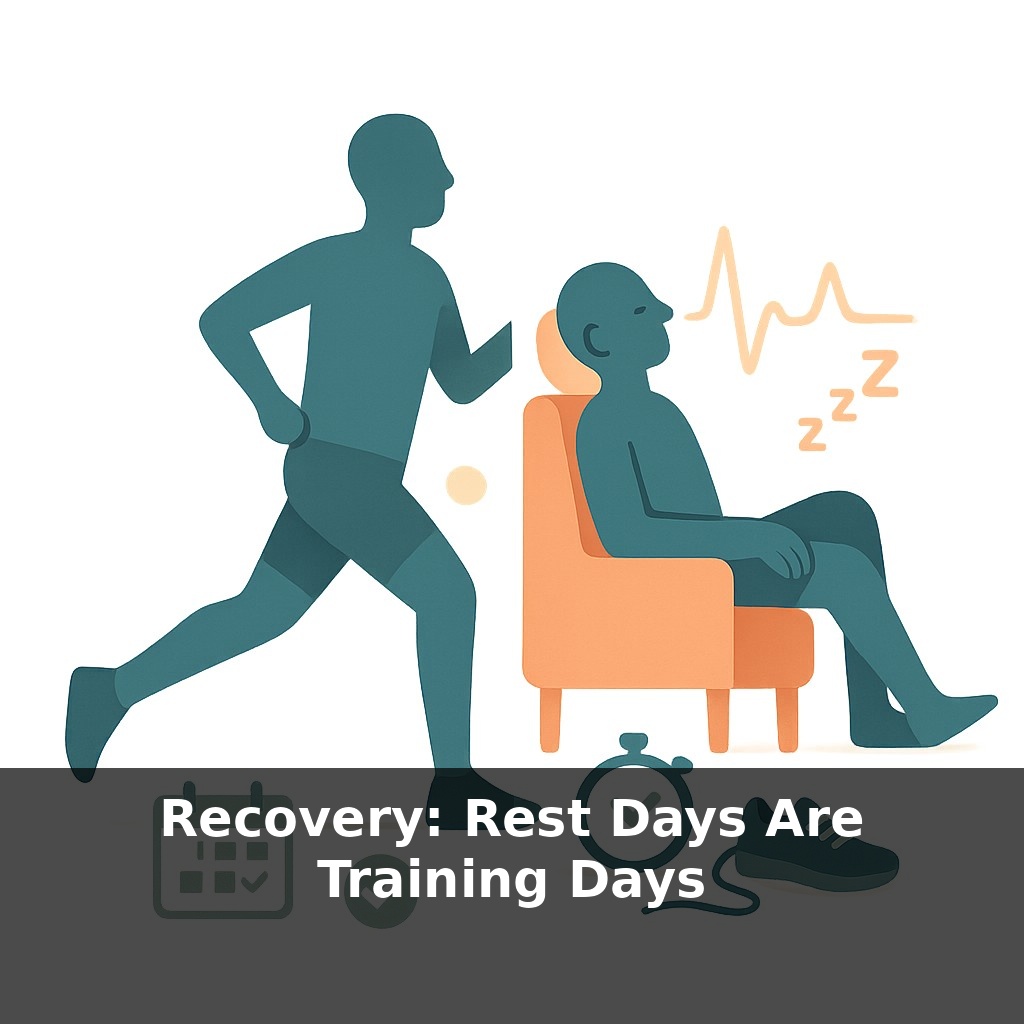
This is where **active recovery** matters. Light cycling, easy walking, mobility work, or gentle yoga keep blood moving, joints lubricated, and your brain engaged with the habit of “I’m a person who trains,” without adding real strain. It’s not laziness; it’s targeted maintenance.
High‑performing athletes treat these tiers of recovery like a coach, a physio, and an accountant rolled into one: guiding effort, preventing breakdowns, and making sure every hard session actually pays dividends instead of just generating stress.
Think about three very different people: a new lifter, a busy parent who walks and does home workouts, and a serious cyclist. All three *need* recovery—but how it looks is totally different.
For the lifter, “rest” might mean alternating heavy leg days with technique‑focused upper‑body work, so lower‑body muscles still get that 24–48‑hour upgrade window instead of back‑to‑back pounding.
For the parent, it could be swapping one “all‑out” HIIT session for a stroller walk and early bedtime, noticing that energy for the next workout is finally there instead of relying on caffeine.
For the cyclist, it might mean watching heart‑rate response on easy spins: if power is low but heart rate is oddly high, that’s a nudge to back off before fatigue stacks into something nastier.
Skipping this is like a doctor writing endless prescriptions without ever checking blood work: you’re *doing* a lot, but you’re not sure it’s helping—and it might quietly be making things worse.
Your future training plan might look less like a fixed calendar and more like a living contract between your body and your devices. As wearables track your sleep, stress, and HRV, algorithms could nudge you toward a gentle session instead of another grind, the way a good financial app warns you before you overspend. Public health advice may follow, shifting from “hit 10,000 steps” to “hit your rhythm,” valuing how well you recover as much as how hard you work.
So treat rest like any other workout: deliberate, scheduled, and worth defending. Block it on your calendar the way you would a meeting, guard your sleep like rent money, and let easy days be truly easy. Over time, you’ll notice a quieter, steadier progress curve—less drama, more consistency—like turning random sketches into a coherent, evolving portrait of your fitter self.
Try this experiment: For the next 7 days, treat your rest like a workout by scheduling one “Recovery Session” in your calendar with a start time, end time, and a specific protocol (for example: 10 minutes of nasal breathing on the floor, 5 minutes of light couch stretch, 10 minutes of walking outside). On training days, keep your normal workout but cap your intensity so you finish with a bit “left in the tank” instead of going to failure. On rest days, skip all hard training and do only your Recovery Session plus an easy 15–20 minute walk. At the end of each day, quickly rate your energy (1–10) and sleep quality (1–10), and at the end of the week compare how your best training session felt versus weeks where you didn’t protect recovery like this.