About half of people who join a gym quit before summer, yet many of them still *believe* they’re “someone who works out.” So here’s the puzzle: if the habit dies, why does the label linger—and could flipping that relationship be the secret to staying active for life?
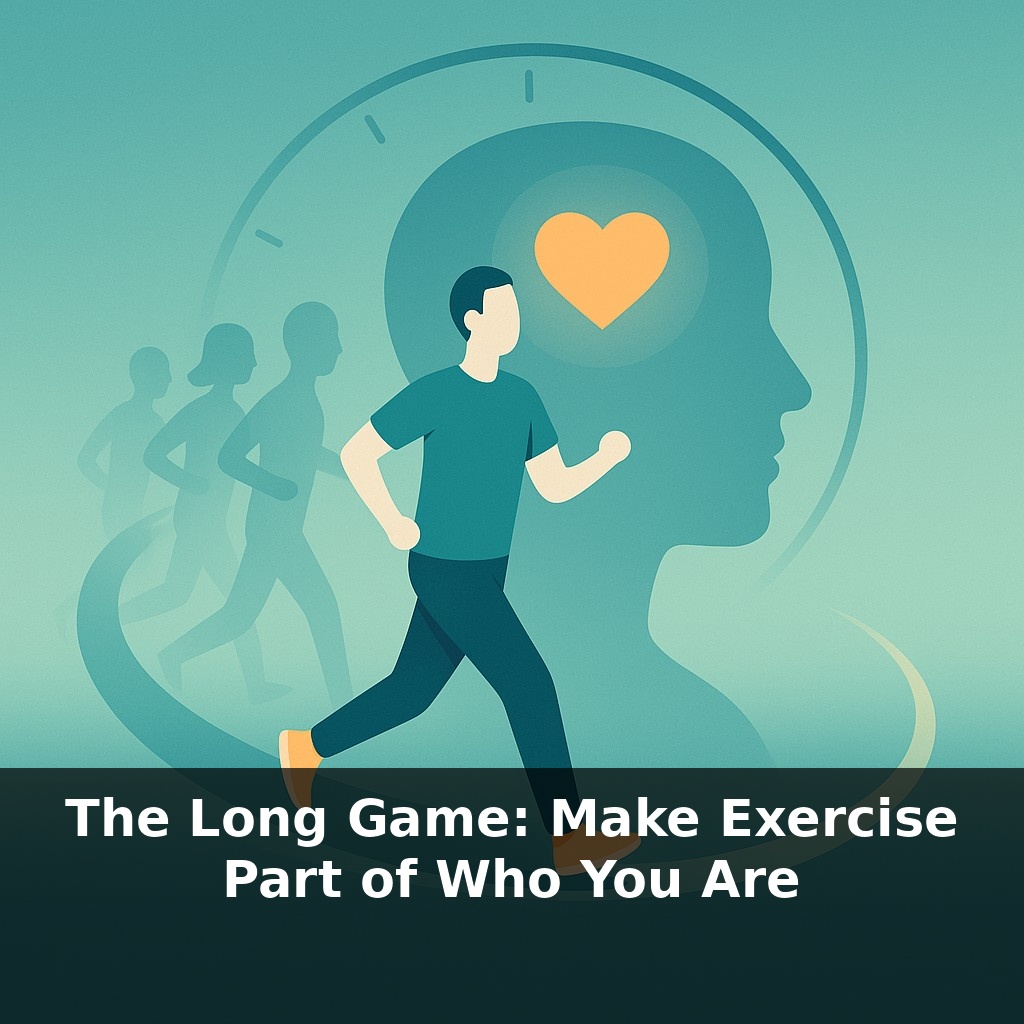
Here’s the twist: the people who *keep* moving for decades don’t just have stronger willpower or better schedules—they have a different story about who they are. Research shows that when movement becomes part of your identity, your brain treats it less like an optional task and more like brushing your teeth: something that feels “off” when you skip it. This isn’t about forcing a new label overnight; it’s about collecting small “votes” for a new self-concept until it feels true. Neuroscience backs this up: each time you act in line with a chosen identity, you strengthen the neural pathways that make that identity easier to live out next time. Instead of chasing motivation, you’re quietly changing the kind of person you believe you are—so even when life gets chaotic, you feel pulled back to movement rather than pushed into it.
So how do people actually reach that “I’m just someone who moves” place without faking it? Research from behavioral psychology suggests they rarely begin with grand declarations; they start with oddly specific choices: “I walk 10 minutes after lunch,” “I do push-ups while the kettle boils.” These micro-commitments act less like rules and more like signatures on tiny contracts with yourself. Over time, your brain starts noticing a pattern: “I keep showing up.” That pattern matters more than intensity or perfection. Miss a day and the story doesn’t collapse—it simply waits for the next confirming action to keep the narrative going.
Here’s where the long game gets interesting: your body can actually *help* reshape how you see yourself—if you know what to listen for.
When you move, your muscles release molecules like myokines and your brain gets a bump in dopamine and endorphins. That cocktail doesn’t just improve mood; over time, it quietly teaches your nervous system, “This is good for us.” The key is to notice and amplify those signals instead of rushing past them. A brisk 8‑minute walk that leaves you a bit more alert, or three sets of squats that make stairs feel easier later—that’s your biology voting for more of the same.
People who stay active for years usually have a very different radar. They don’t only track the scale or mirror; they track *usefulness*: “I carried all my groceries in one trip,” “I played on the floor with my kid without my back complaining,” “I slept through the night.” Those are physical “dividends” that arrive surprisingly fast, sometimes within days or weeks, and they’re far more reliable than waiting for dramatic aesthetic change.
Here’s another twist from the research: the more specific the *role* you adopt, the stickier your participation becomes. “I’m active” is vague; “I’m a lunchtime walker,” “I’m the sibling who organizes the hike,” or “I’m the person in our team who stretches before long meetings” gives your brain a clear script. Roles come with built‑in behaviors and often with a social backdrop—other people see you do the thing, which reinforces it without you having to think about “discipline” all the time.
That’s where environment quietly does half the work. Shoes by the door, a yoga mat that lives next to the couch, a pull‑up bar in the hallway—these aren’t motivational posters; they’re physical prompts that make acting on your role the easiest option in the moment. Over weeks, the friction to move drops, and it starts feeling stranger *not* to follow through.
Think of it the way a good clinician thinks about treatment: not as a single dramatic intervention, but as a carefully dosed regimen, adjusted over time, where small, consistent applications create a profound shift in baseline health.
Think about how musicians claim their craft. A beginner doesn’t start by announcing, “I’m a concert pianist.” They say, “I’m learning this one song,” then keep touching the keys most days. Over time, their calendar fills with lessons, rehearsals, playlists, friends who play, maybe a keyboard in the living room. The role grows because their life quietly wraps around it.
Movement can creep into your days the same way. The colleague who always takes phone calls while circling the block. The parent who makes “walk to the bakery” the Saturday ritual. The friend who’s known for suggesting “Can we talk while we walk?” instead of “Let’s sit for drinks.” None of these start with massive workouts; they start with oddly specific ways of being that repeat.
You can even assign yourself “practice pieces”: stairs instead of elevator at work, five minutes of stretching while coffee brews, a short walk after your commute. These aren’t rules; they’re tiny performances of the role you’re rehearsing until it feels natural.
As tech, cities, and medicine evolve, your future “mover self” could be supported in ways that feel almost invisible. AI might notice when your calendar, stress, and sleep collide, then suggest a 7‑minute reset that fits your values, the way a good editor trims sentences to reveal your voice. Streets designed for walking and cycling could turn your commute into daily training. Personalized exercise prescriptions may arrive like tailored financial plans, optimizing your “movement portfolio” for long-term health returns.
Over time, those quiet “I showed up” moments start to feel less like separate wins and more like your default setting. You’re not chasing streaks; you’re curating a personal playlist of ways your body helps you live the day you want. Let curiosity lead: tweak the “tracklist,” keep what feels good, and let the rest fade. That’s how the long game quietly becomes your normal.
Before next week, ask yourself: 1) “If exercise were truly part of ‘who I am’ instead of something on my to‑do list, what would my *default* week look like—what days, what time of day, and what kinds of movement (walking meetings, strength, stretching, classes) would naturally fit my real life?” 2) “Looking at my actual schedule for the next 7 days, where can I ‘stack’ movement onto something I’m already doing—like walking during a phone call, doing 10 minutes of strength while the coffee brews, or biking instead of driving for one errand—and what exactly will I do and when?” 3) “When I inevitably don’t feel like moving this week, what is my ‘bare‑minimum version’ of a workout (e.g., a 5‑minute walk after lunch, 10 squats and 10 pushups before showering) that I’ll commit to instead of doing nothing, and how will I remind myself that this is me practicing the long game, not failing at it?”