About half of what you did today, you never actually decided to do. You just… did it. Standing in line for coffee, scrolling your phone in bed, reaching for a snack after email—tiny moves on autopilot. Hidden in those moments is the quiet machinery that runs your life.
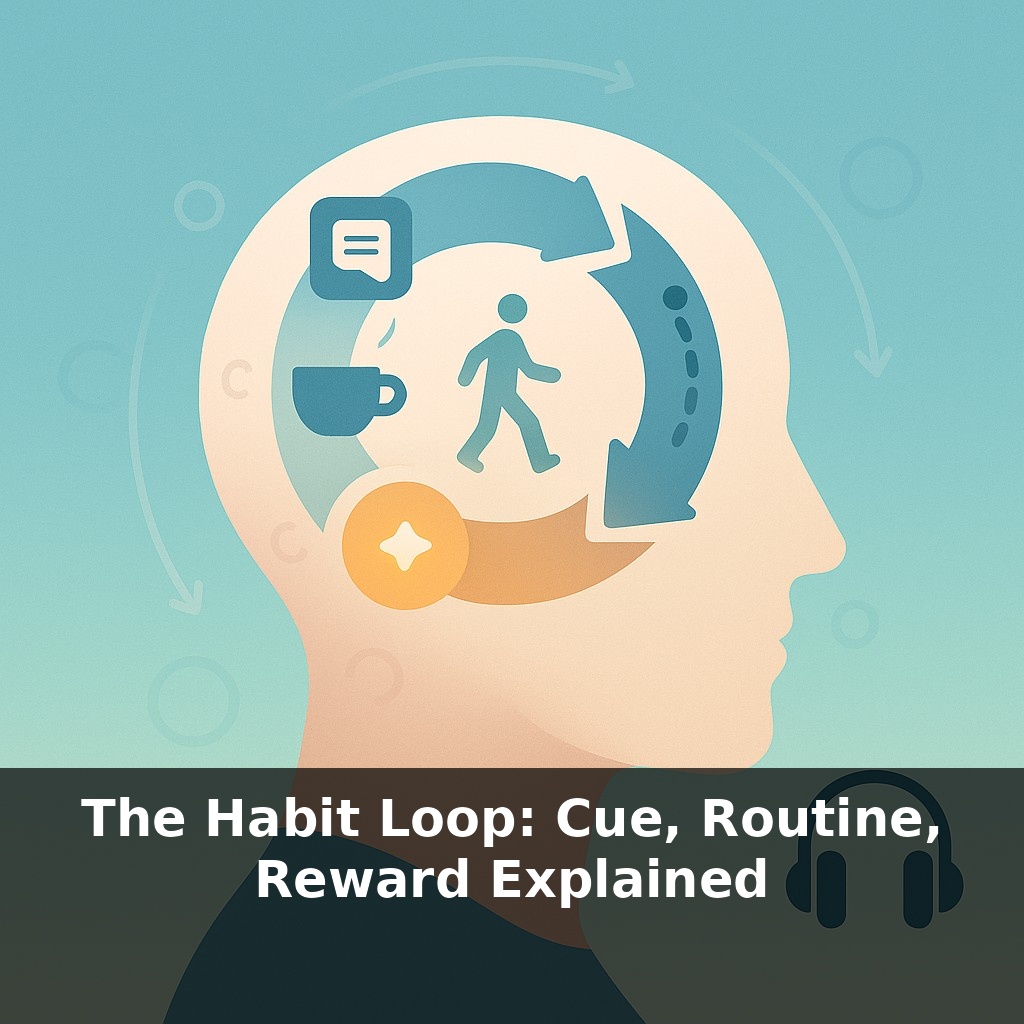
That unseen system isn’t random—it’s structured. Underneath nearly every “I don’t know why I did that” moment sits a simple three-step pattern: something sets you off, something happens almost automatically, and something about it feels good enough that your brain files it away as worth repeating. That’s the habit loop.
You don’t need more willpower to change; you need to find those loops.
Notice how certain emails instantly tense your shoulders, how your feet drift toward the kitchen when you’re stuck on a task, how a notification ping somehow ends with you 20 minutes deep in social media. Each of those starts with a specific trigger, follows a familiar script, and ends with a payoff—relief, distraction, comfort, stimulation.
This episode is about pulling that pattern into the light so you can start editing the script instead of just acting it out.
Those loops aren’t just mental quirks—they’re built into your hardware. In brain scans, the basal ganglia light up when a habit runs, while decision-making regions go quiet, like a dimmer switch on conscious choice. That’s efficient: it frees up bandwidth for tougher problems. But it also means many “preferences” are really just rehearsed responses.
Here’s the twist: repetition isn’t enough. Without a timely reward, the brain barely bothers to encode the sequence. That’s why vague goals flop, while checking a tiny box on a tracker can feel oddly satisfying—and stick far longer than you’d expect.
Think of the loop as three separate dials you can adjust: cue, routine, reward. Most people tug on the middle one (“I’ll just stop snacking / start running”) and ignore the other two. That’s like trying to redirect a river without touching the riverbed or the ocean it flows into.
Start with the cue. Cues are specific—time, place, emotion, people, preceding action. “Evenings” is vague. “9:30 p.m., on the couch, Netflix open” is a cue. Researchers estimate 40–50% of your day is driven by anchors like these. Change what comes before, and you quietly reroute what comes after. This is why moving desk snacks out of arm’s reach often works better than “being good.”
Then, zoom in on the routine. Here’s the crucial twist: the same cue can drive a completely different behavior if the underlying need is met another way. Stress at work can lead to doomscrolling, venting to a friend, or a quick walk—very different outcomes, same spark. You’re not “a procrastinator”; you’re running a stress-response routine that’s been rehearsed into efficiency.
But the real leverage is often in the reward. Your brain is sampling: “Did this help?” If the benefit lands too late or too weakly, the loop doesn’t lock in. That’s why “I’ll feel healthier in 6 months” loses to “this tastes good now.” In the Febreze case, the cleaning routine already existed; adding a satisfying “fresh scent” at the exact moment people stepped back from a clean room created a tight loop: see mess → clean → inhale “ahh, I did it.”
For health habits, the same rule applies. A workout ices your future blood pressure, but your brain cares more about the immediate shift: music you enjoy, a post-workout shower, the tiny rush of checking off “done.” Those are not trivial; they are the glue.
So the practical question isn’t “How do I force myself?” It’s:
- What precisely sets this off? - What job is this behavior doing for me right now? - How could I deliver that same job with less cost—and a reward that lands fast?
You’re not dismantling your life; you’re rewiring three small links, one loop at a time.
You can see this three-part loop most clearly at the edges of your day. Take your phone by the bed. Your eyes flick open, you notice a faint glow on the nightstand, your hand moves before you’ve formed a sentence in your head. A few notifications later, you feel a tiny hit of “being in the know.” That sequence is not random; it’s a learned solution to “I don’t want to feel behind.”
Or look at evening snacking. You’re not just “weak at night.” The show pauses, your brain registers a brief lull, your body remembers: this is when we get something tasty. The crunch and flavor are doing emotional work—marking a mini-break, softening the edges of the day.
In health, one small tweak can redirect the same starting point. Someone who used to crash on the couch after work might instead change into walking shoes the moment they drop their bag—no debate. The shoes become a physical hinge between “work mode” and “off-duty,” and a short walk still signals, “Day’s over; you did enough.”
As tech and policy catch up, those loops won’t stay a private matter. Wearables may soon flag rising stress like a smoke alarm, then prompt a 60‑second breathing drill instead of a snack run. Therapeutic apps will “pay” you instantly—through micro‑rewards—each time you choose a walk over a drink, like interest appearing the moment you transfer money. At the same time, regulators will scrutinize apps that hijack your loops, much like they do casinos, forcing platforms to justify every flashing “continue” button.
Your challenge this week: Treat yourself like a field researcher. For 3 days, pick ONE health behavior you care about—better sleep, less late-night snacking, or more movement. Each time it happens (or doesn’t), jot down three things only: the last thing you did before, what you did, and what felt good in the next 5 minutes. No judgment, no “fixing” yet. By day 3, look for your most common “before → behavior → feel-good” chain and star it; that loop is your best entry point for change.
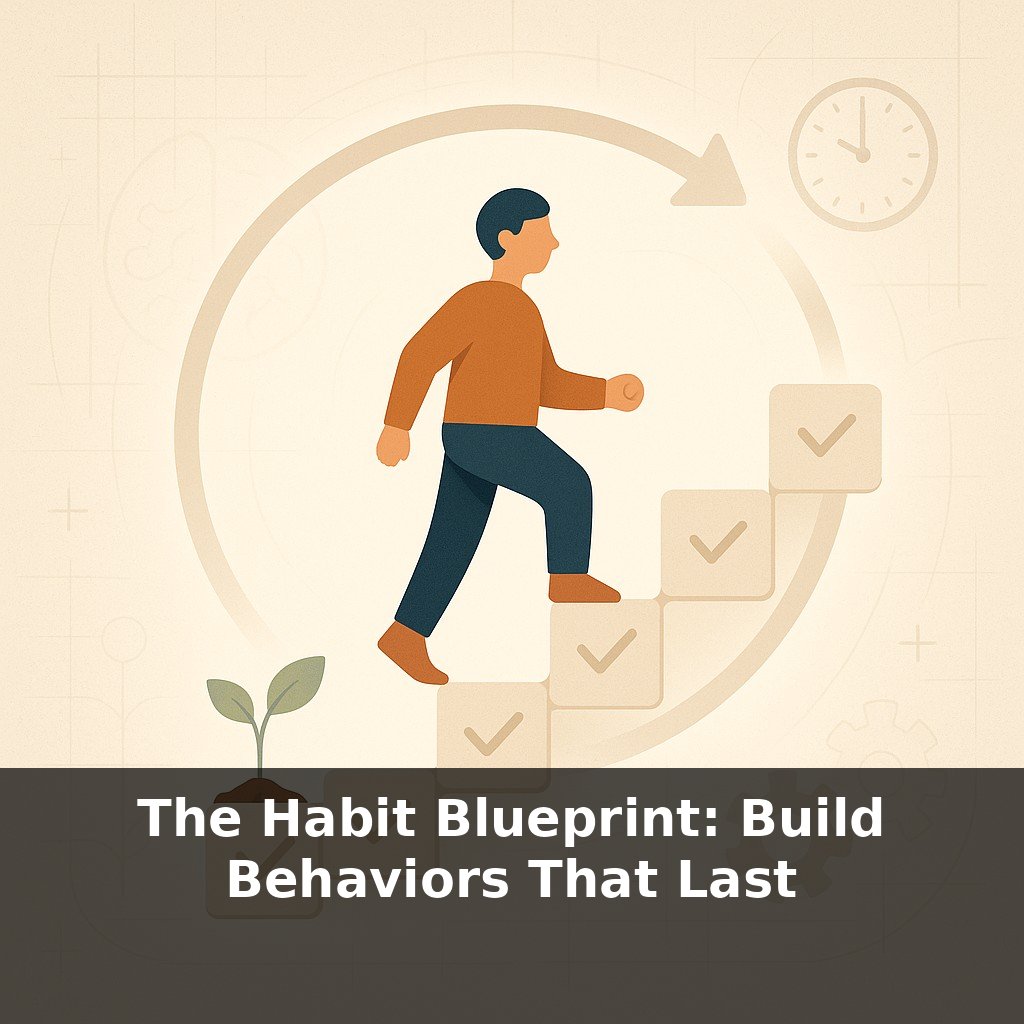
You’re not chasing perfection here; you’re training your brain to recognize subtle “weather changes” in your day and adjust your behavior like a skilled sailor trimming the sails. As you spot more of these loops, experiment gently—swap one small move, add one tiny win. Over time, those micro-edits can redirect the whole voyage of your health.
Before next week, ask yourself: 1) “Looking at one habit I repeat almost every day (like checking my phone in bed or snacking at 3 p.m.), what *exactly* is the cue that kicks it off—time, place, emotion, person, or preceding action—and when do I notice it most clearly?” 2) “If I keep the same cue but swapped my usual routine for a different one that gives a similar reward (for example, a 5‑minute stretch or walk instead of scrolling, a glass of water or quick chat instead of a sugary snack), which option actually feels realistic for me to try this week?” 3) “After I experiment with this new routine once or twice, what concrete evidence (energy level, mood, focus, or sense of control) do I notice that tells me whether this new habit loop is worth repeating?”