Right now, almost half the things you’ll do today will happen on autopilot—and you won’t notice most of them. You brushing your teeth half-asleep. You reaching for your phone. You choosing the elevator over the stairs. The real question is: who’s programming that autopilot?
The trouble is, most people try to rewrite that autopilot by declaring war on their entire life all at once: “I’ll run 5 miles every day,” “No more sugar, ever,” “Two hours of reading before bed.” It sounds disciplined, but your brain reads it like a flashing alarm. Big, effort-heavy changes trigger resistance, stress, and endless negotiation: “Start tomorrow… maybe next week… after this project.” Meanwhile, your existing patterns keep quietly winning. The research points in a different direction: when a habit is so small it feels almost silly—one push-up, one deep breath before opening email, filling half your plate with vegetables—your brain stops fighting. The bar is low enough that doing it is easier than debating it. That’s the shift we’re going to explore: how shrinking your first step can unlock the consistency you’ve been chasing with willpower alone.
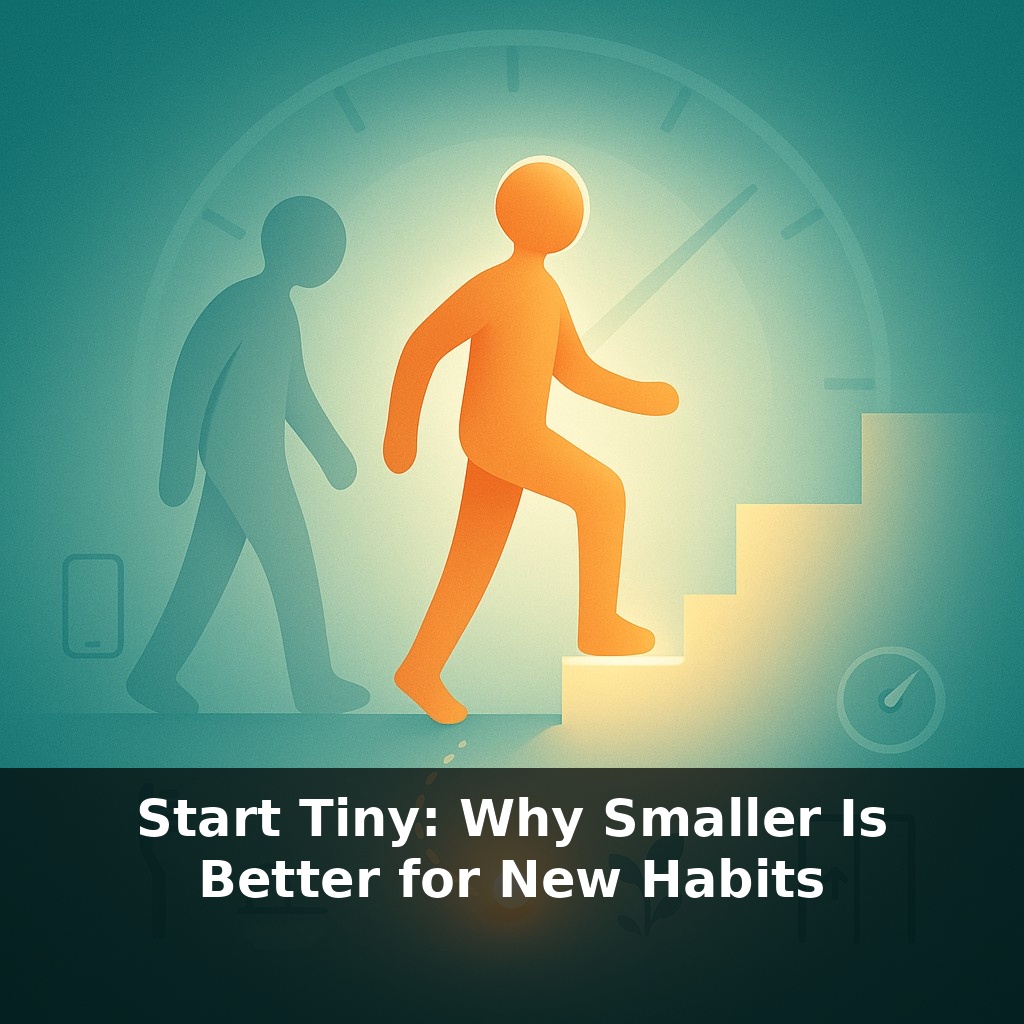
Here’s the twist: your brain doesn’t care how impressive a new routine looks; it only cares how *costly* it feels in the moment. Psychologists call this “activation energy”—the effort required to go from doing nothing to doing something. Think of it like the difference between cracking open a book versus committing to finish three chapters. One feels like a nudge, the other like homework. When that upfront cost is low enough, your nervous system stays calm, your inner negotiator quiets down, and repetition becomes realistic—even on bad days, busy days, and “I don’t feel like it” days.
Here’s where the research gets interesting: when you start tiny, you’re not just “doing less,” you’re quietly rewiring three powerful systems at once—your reward circuitry, your sense of identity, and your decision-making shortcuts.
First, rewards. Your brain loves closing loops. Each time you complete a very small action, you generate a quick internal “win.” Do it right, and you feel a subtle but clear *click* of satisfaction. That feeling isn’t fluffy; it’s your dopamine system tagging the behavior as worth repeating. The key is that the action is so easy, you can succeed even on your worst day—so the “win” is almost guaranteed. That turns repetition from a moral struggle into a predictable outcome: if you show up, you succeed.
Second, identity. Every repetition is a vote for the kind of person you see yourself as. One ten-minute workout doesn’t transform your fitness, but it *does* transform the narrative from “I can never stick to exercise” to “I’m someone who moves, even a little.” That shift matters because future you makes decisions based less on goals (“I want to be healthy”) and more on identity (“I’m the kind of person who takes care of my body”). Tiny actions let you cast many more of those identity votes with far less friction.
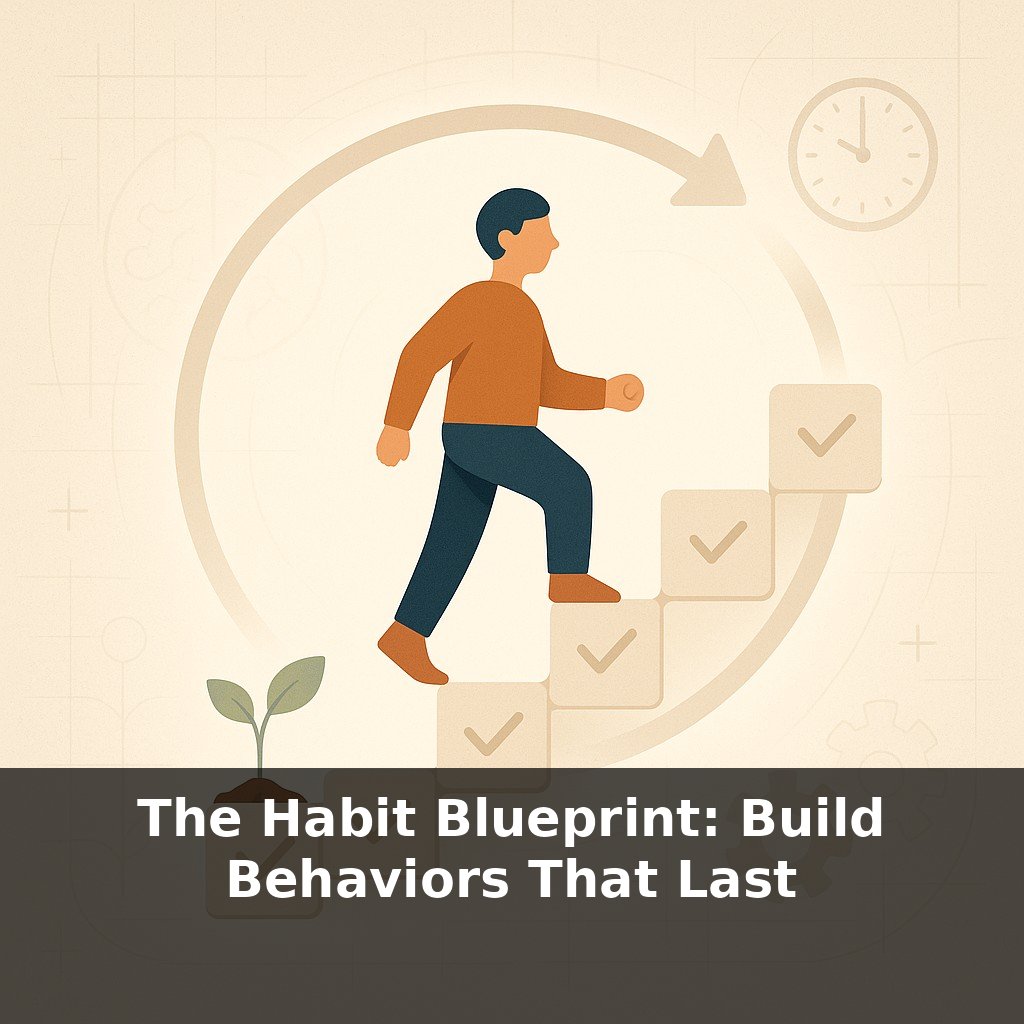
Third, decision shortcuts. Over time, repeated behaviors carve “if-this-then-that” tracks in your brain. “If I start the coffee machine, then I fill my water bottle.” “If I sit at my desk, then I open my notes before email.” Each small pairing reduces the micro-decisions that drain your mental energy. That’s one reason the 66-day average to automaticity is so misleading: simple, tiny behaviors can lock in much sooner, while complex ones naturally take longer.
You can see this principle at work in elite domains. British Cycling didn’t start with revolutionary overhauls; they asked, “Where can we get 1% better?” They improved sleep, adjusted bike seats, even refined hand-washing to reduce illness. None of those changes were dramatic by themselves, but together they produced dominant performance.
Think of your routine the same way: you’re not chasing one heroic overhaul; you’re stacking dozens of near-effortless upgrades that, over time, quietly shift the trajectory of your health.
Think of a surgeon learning a new technique: they don’t start in a 10‑hour live operation. They begin on models, then short, controlled procedures, each one just complex enough to stretch their skill without overloading it. Your daily behaviors respond the same way. If you want to walk more, the “surgical model” might be: put your shoes by the door and commit only to stepping outside once after lunch. If you want to eat better, upgrade just one snack—swap the afternoon pastry for fruit three days this week, not your entire menu. Trying to improve sleep? Start by dimming screens 15 minutes earlier, not by forcing a rigid 10 p.m. lights‑out rule. These moves look almost trivial, but they give you real‑world reps: you learn what time of day feels easiest, what triggers help, what friction shows up. Each tiny experiment becomes data, not a verdict on your discipline. Over a few weeks, you’re not guessing what “should” work—you’re iterating toward what reliably does.
Tiny shifts today may shape where medicine, tech, and policy go next. As AI coaches learn your rhythms, they could suggest micro‑moves that suit your exact stress level or schedule, like a tailor adjusting stitches, not redesigning the whole suit. Wearables might quietly flag when you’re slipping and offer a one‑minute redirect. Even cities and workplaces could be designed around default micro‑nudges—water at eye level, stairs slightly more visible—so “healthy” becomes the path of least resistance.
Your life already runs on dozens of quiet loops; the opportunity now is to choose a few on purpose. Like rearranging furniture, a tiny tweak in where behaviors “sit” can change how you move through every day. Your challenge this week: shrink one health goal until it feels almost laughable—then repeat it daily and simply notice what starts to shift.