Right now, people who simply *track* what they do can end up changing about twice as much as those who don’t. You wake up, tap one box on your phone, and that tiny checkmark quietly rewires your brain. This episode breaks down why that simple mark can be your strongest habit tool.
People who log what they do don’t just feel more “organized”—they get measurably better outcomes. In one study, people who tracked their meals lost more than twice as much weight as those who didn’t. Language learners who keep a 30‑day streak complete about four times more lessons than those who drop in sporadically. Athletes who set and monitor weekly goals show up for roughly 15% more active days.
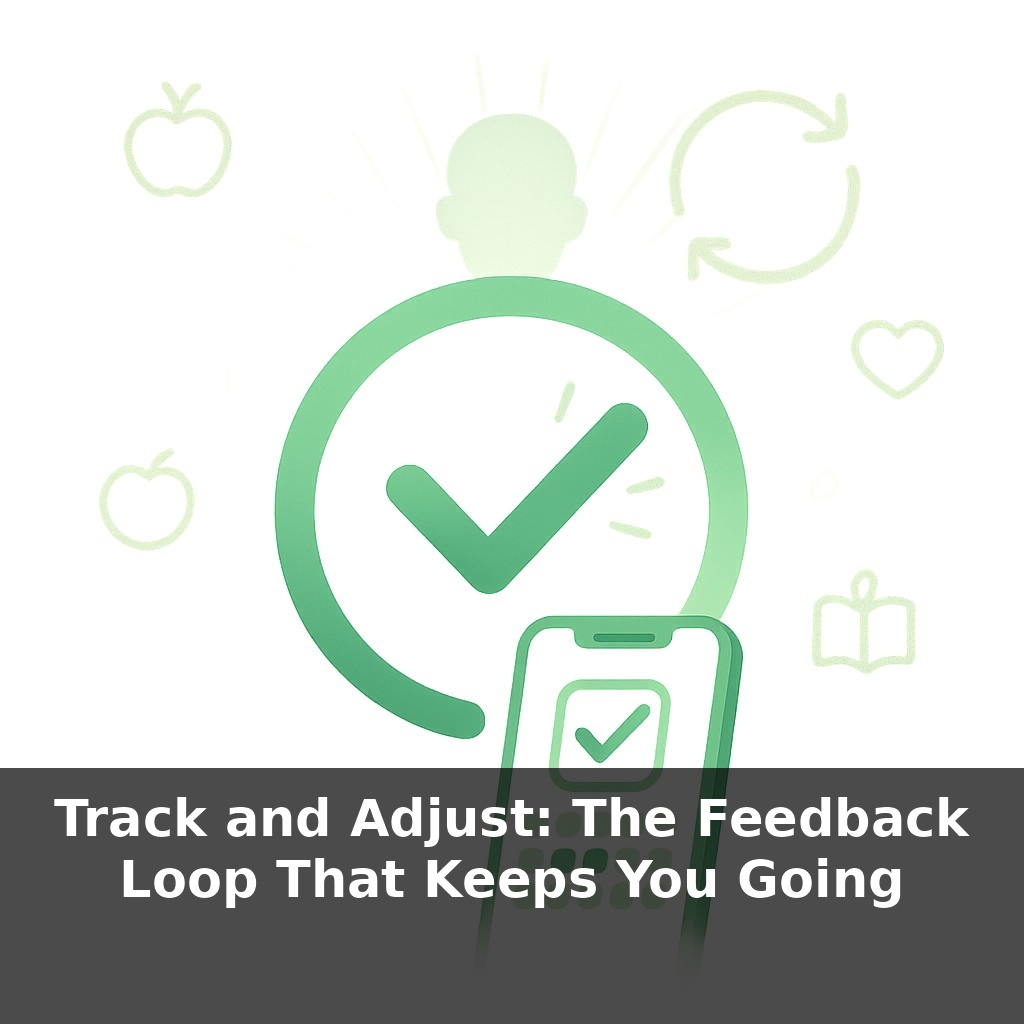
The difference isn’t willpower; it’s feedback. Each data point you record quietly answers three questions: “Did I do it?”, “How well did I do it?”, and “What’s changing over time?” When those answers are visible, your brain starts adjusting automatically—speeding up what works and flagging what doesn’t.
In this episode, you’ll learn how to turn that feedback into a simple loop: track, read the signal, then tweak the habit so it keeps fitting your real life instead of fighting it.
Most people stop at “Did I do it, yes or no?” and miss the real power of a feedback loop: *how* today compares to yesterday, last week, and last month. When you can see that your average workout length has crept from 10 to 18 minutes over 21 days, or that you hit your bedtime goal 5 nights this week instead of 2, your brain gets a clear, motivating story: “This is working—keep going.” In practice, that means tracking details like duration, intensity, or timing, not just completion. The goal now is to make your tracking precise enough that small adjustments become obvious.
To make this loop useful, you need two things: the *right* signals and a simple way to react to them.
Start by deciding what you’ll actually record. For a 20‑minute walk habit, you might log: - Start time (e.g., 7:10 p.m.) - Duration (e.g., 18 minutes) - Effort from 1–10 (e.g., 6) - A quick tag like “tired,” “rushed,” or “easy”
That’s four data points—enough to see patterns without turning your life into a spreadsheet.
Next, give your brain a clear target. Vague goals like “walk more” don’t create a sharp signal. Instead: “Walk at least 15 minutes, 5 days per week, before 8 p.m.” Now, when you review, “on target” vs. “off target” is obvious.
Where the loop really kicks in is in *micro‑adjustments*:
- **Difficulty:** If you planned 30 minutes but only average 12, shrink the target to 15 for the next 7 days. When your success rate crosses ~80% (4 of 5 days), bump it by 2–3 minutes. - **Timing:** If you miss 4 of 5 evening sessions, try a 7‑day test at a different time—before breakfast, at lunch, or right after work. Compare completion rates: 20% vs. 80% tells you where the habit actually fits. - **Context:** Add or remove one environmental feature at a time. Lay out shoes by the door, move the meditation cushion next to your bed, or uninstall a distracting app for 7 days. Track how these tweaks change your follow‑through.
Think in 7‑ or 14‑day cycles. For each cycle, ask just three questions: 1. How many reps did I intend? 2. How many did I complete? 3. What changed when I adjusted one variable?
Use concrete numbers: “Planned 10 sessions, did 6, all successes were before 9 a.m.” is enough to justify a new rule: “Morning only.”
Qualitative habits still fit this model. For meditation, you might log: - Minutes sat (e.g., 5, 7, 9) - A 1–5 focus score - One word about the setting (“desk,” “bed,” “park”)
Then you can spot that 5‑minute sessions at your desk score 4/5, while 10‑minute sessions in bed score 2/5. That’s not a failure; it’s evidence to redesign where and how you practice.
The goal isn’t perfect data; it’s visible trends that tell you precisely what to tweak next.
A simple way to see this in action is to watch what happens over a month with one specific health habit.
Say you’re building a hydration habit. For the next 30 days, you jot down three numbers each night: - Total glasses of water (e.g., 4, 7, 9) - Time of your last glass (e.g., 6:30 p.m., 9:15 p.m.) - Night‑time wakeups to use the bathroom (0, 1, 3)
By day 10, you notice that on days you drink 8–10 glasses after 4 p.m., you wake up 2–3 times. On days you front‑load 4–5 glasses before noon and cap the evening at 2, you usually sleep through. You don’t just “feel” this—you can point to 7 out of 9 early‑heavy days with 0–1 wakeups.
Now you make one change: no more than 2 glasses after 7 p.m. Over the next 14 days, your average wakeups drop from 2.1 to 0.8, and your total daily water stays around 7–8 glasses. You’ve effectively customized your routine by reacting to real numbers, not guesses.
Soon, your numbers won’t just sit in an app—they’ll push back. Devices already suggest shifts like “go to bed 25 minutes earlier” or “cut tonight’s workout by 10%.” Expect far tighter loops: alerts when your evening screen time rises 30%, or prompts to walk when your heart‑rate variability drops 12%. The skill to build now is judgment: deciding when to follow a nudge, when to override it, and when to turn it off entirely.
Now put the loop to work: set a 7‑day test with one health habit and one clear win condition, like “5 walks, 10 minutes each” or “in bed by 11:00 p.m. on 4 of 7 nights.” At week’s end, keep any change that improved your success by ≥20%, drop what didn’t, and launch a new 7‑day tweak. Iteration, not intensity, is how the habit sticks.
Here’s your challenge this week: Every day for the next 7 days, run a “mini feedback loop” on one specific goal you’re working on (like writing 500 words, hitting 30 minutes of focused work, or completing a workout). Before you start, set a clear target and timer; after you finish, rate the session from 1–5 on how focused, effective, and enjoyable it was, and note one concrete tweak for tomorrow (e.g., change time of day, shorten the session, remove a distraction, or adjust the difficulty). By the end of the week, compare your day 1 and day 7 ratings and lock in the 1–2 tweaks that made the biggest difference, then commit to using that improved version of your loop next week.