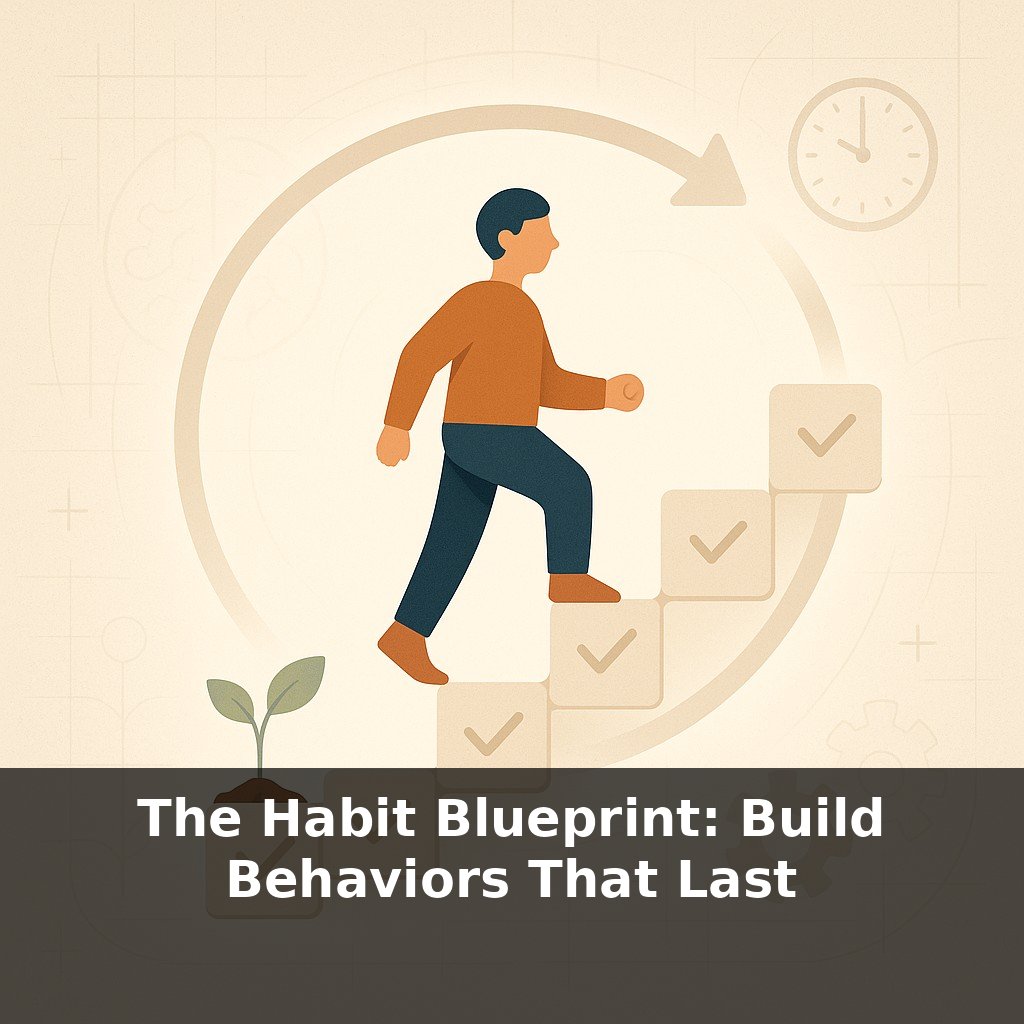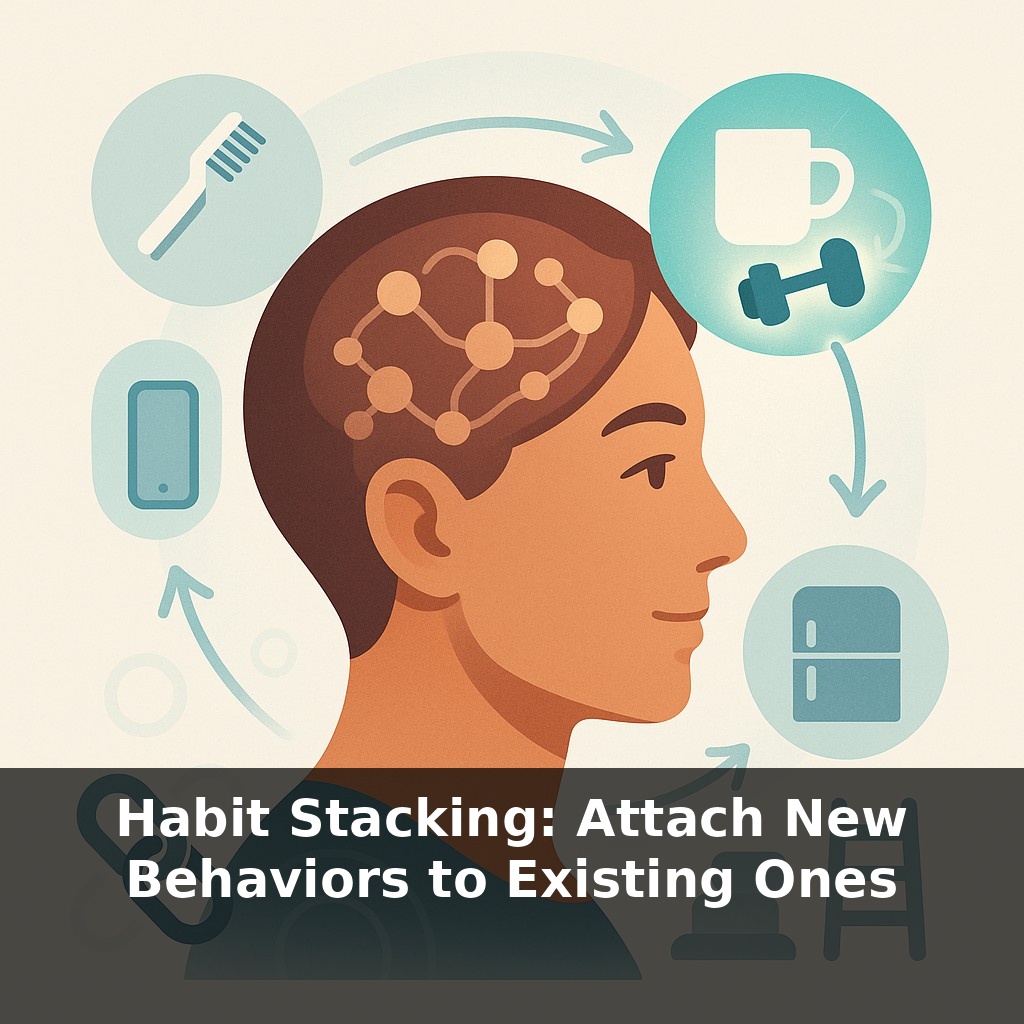
Right now, your brain is quietly turning routines into mental shortcuts. You reach for your phone, brush your teeth, open the fridge—without deciding. Here’s the twist: the fastest way to build a new habit isn’t starting from scratch. It’s sneaking it onto the habits you already have.
Forty percent of what you’ll do today will run on habits, but here’s the part most people miss: those habits are already giving you free “attachment points” for change. You don’t need more motivation; you need better anchors.
Research on “implementation intentions” shows that when you decide in advance, “After I do X, I will do Y,” your odds of follow-through can skyrocket compared with vague goals like “I’ll try to eat healthier.” The trick is choosing the right X—something you already do, almost every day, without fail.
Think of small, reliable moments: starting the coffee maker, sitting down at your desk, closing your front door, plugging in your phone at night. Each one is a tiny on-ramp where a new behavior can quietly hitch a ride. In this episode, you’ll turn those everyday micro-moments into precise formulas that make your next health habit almost automatic.
You’ve already seen how daily routines can act like anchors; now we’ll get more precise about *which* anchors actually work. Not all “after I do X, I’ll do Y” plans are created equal. Some anchors fire once a week, or only when you’re in a good mood, and those make flimsy foundations. Others are as regular as your shadow at noon. That reliability is what turns a nice health intention into something your brain can run with. In practice, this means zooming in on tiny, clockwork actions that happen in the same place, in the same way, so your new behavior has something solid to lock onto.
Most people start habit stacking by picking the *wrong* anchor, then blame themselves when it doesn’t stick. The issue usually isn’t willpower; it’s that the cue was fuzzy, rare, or overloaded.
The brain favors cues that are: 1) Sensory and concrete 2) Tied to a physical action 3) Happening in a stable context (same place, same time-window)
So instead of “after work,” think, “when I put my keys in the bowl,” or “when I sit in my desk chair.” “After work” is a moving target; sitting, standing, turning, and touching are not.
A useful way to choose anchors is to scan your day in “sensory slices” rather than time slots. Walk through a typical morning as if you’re replaying a video: what your hands touch, what you see, hear, or feel on your skin. The moment your coffee mug hits the counter, the click of your seatbelt, the snap of your laptop closing—these are crisp, recognizable events your brain can easily tag.
Next, match *energy level* and *environment* between anchor and new action. Stacking an intense workout onto “when I collapse on the couch at 9 p.m.” clashes with the low-energy state that cue represents. But adding two stretches or 10 slow breaths there fits the mood and space, so it’s more likely to happen.
Think in “micro-links”: instead of “after I brush my teeth, I’ll do a 30‑minute run,” you might use: “After I brush my teeth, I’ll put my running shoes by the door.” You’re only wiring the *first* visible step to the anchor. The fuller behavior can follow from that prompt, but the stack itself stays tiny and almost frictionless.
Placement matters too. Visual clutter competes with your cue. If your anchor is “after I start the kettle,” yet your vitamins are in a closed cabinet across the room, the link has to fight more noise. Moving the bottle next to the kettle quietly upgrades the stack without extra motivation.
One helpful test: could a friend *watch* your day and reliably predict when the stacked behavior should happen? If the answer is no, your anchor is still too vague. Clear, observable anchors give your brain a consistent “start signal,” which is what lets the association strengthen over time.
A practical way to test habit stacks is to treat them like mini A/B experiments. Version A: “When the kettle boils, I take three slow breaths.” Version B: “When I open my email, I take three slow breaths.” Run each for three days and simply notice: which one survives chaotic mornings, meetings, or travel? The “winner” is usually anchored to something closer to your body and less hijacked by other demands.
Health examples work best when they’re almost embarrassingly small. A nurse finishing late shifts linked “sanitizing my hands between patients” to “rolling my shoulders twice,” and over weeks it cut her neck tension. A software designer tied “pressing run on my code” to “one sip of water,” and his afternoon headaches eased.
You can also chain stacks, but only after the first link feels solid. For instance: “After I put my lunch container in the sink, I’ll take my vitamin. After I take my vitamin, I’ll set out tomorrow’s snack.” The key is stability at each link, not ambition.
Expect your environment to get smarter about cueing you. Instead of you remembering to stack behaviors, your home and tools will start “remembering” for you: a lamp that shifts color when you’ve been sitting too long, or a kitchen display that surfaces a 60‑second stretch as the oven preheats. Like a good jazz partner, these systems will riff on your existing rhythms, not overpower them—if designers stay transparent and let you tune the “volume” of their nudges.
Your challenge this week: pick *one* daily anchor and attach a health tweak that takes under 30 seconds—like 5 calf raises after you microwave leftovers, or a posture reset every time you open a new browser tab. Treat it like tuning an instrument: small, frequent adjustments that, over time, change the entire song of your day.