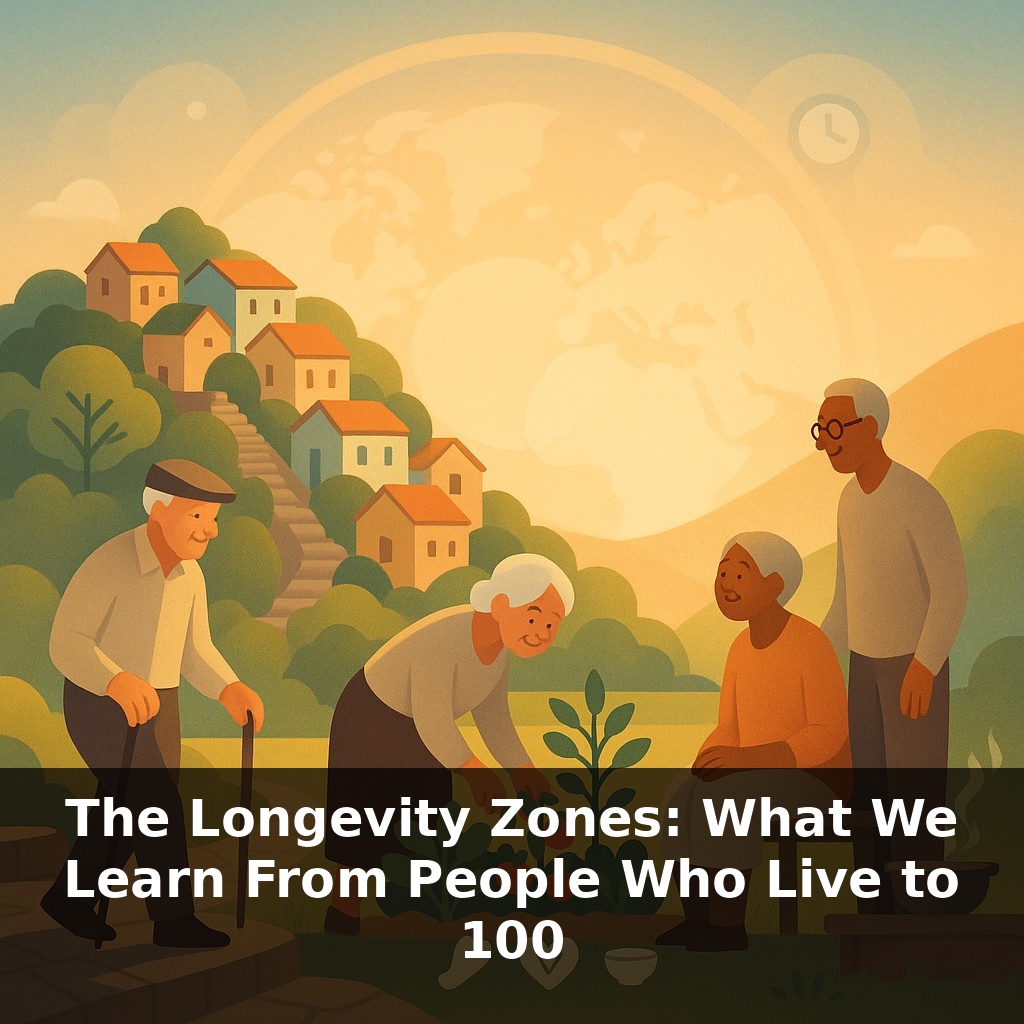
Some villages on Earth have more people over 100 than many cities have in their entire hospital. A shepherd in Sardinia, a gardener in Okinawa, a pastor in California—day after day, they move, eat, and connect in ways that quietly rewrite what we think “old age” has to look like.
In these longevity zones, no one is “biohacking” or chasing superfoods. Their secret is almost boring: the healthy choice is simply the easiest one. Streets are narrow and hilly, so you walk. Families cook big pots of beans and vegetables, so that’s what you eat. Friends drop by unannounced, so you rarely spend evenings alone scrolling a screen.
What makes these places powerful is how the small details of daily life quietly pile up. A shared garden means fresh food and built-in company. A village festival doubles as exercise, social time, and stress relief. Even the way homes are laid out—chairs facing the road, courtyards shared with neighbors—gently pulls people into movement and conversation.
Instead of asking, “Do I have enough willpower?” the better question might be, “What does my environment nudge me to do without thinking?”
In all five regions, what looks “natural” is actually a tight weave of food culture, social norms, and built spaces. No one is counting protein grams or scheduling “cardio”—they’re tending beans because the family recipe demands it, stopping to chat because the path is narrow, resting at midday because the heat insists. Think of it less as personal discipline and more as a background operating system: default settings that quietly favor plants over processed food, walking over sitting, neighbors over isolation, and small daily rituals that keep worry from hardening into chronic stress. The result isn’t a wellness program; it’s a way of life.
In these places, long life isn’t built on a single “secret” but on several overlapping patterns that keep showing up, even though the details differ from village to village.
Food is the most visible one. Sardinians might be simmering minestrone while Okinawans steam purple sweet potatoes, but the common thread is clear: whole, minimally processed plants doing most of the work on the plate. Beans, tubers, whole grains, leafy greens, seasonal fruit, olive oil or other traditional fats—these are the staples, not side dishes. Meat, when it appears, is often used the way a good cook uses spices: to flavor a meal, not dominate it. That naturally caps saturated fat and excess calories without anyone counting a macro or scanning a barcode.
Movement is woven in just as quietly. A Nicoyan farmer doesn’t go for a “workout”; he sharpens a machete and walks his land. An Ikarian woman climbs hills to visit a neighbor, hauls wood, kneads dough. This constant, low-intensity activity is exactly what modern guidelines try to approximate with step goals and standing desks. The difference is that in the Blue Zones, it’s the path of least resistance.
Then there’s the invisible architecture of time and attention. Okinawan elders belong to moai—small, lifelong groups that share financial and emotional support. Loma Linda residents protect a 24‑hour Sabbath from work and commerce, which effectively bakes weekly stress relief into the calendar. In Ikaria, a late, slow dinner doesn’t just fill the stomach; it slows the nervous system and strengthens bonds that can be leaned on when life gets hard.
Across these regions, having a named role—caretaker, farmer, church deacon, village historian—also matters. When researchers ask people in Blue Zones why they get up in the morning, they usually have a concrete answer that involves someone else depending on them. That sense of being needed appears to act like a long-term investment account for health: small, steady “deposits” into motivation, resilience, and willingness to stick around a bit longer.
The point isn’t to copy their recipes or rituals exactly. It’s to notice the categories they consistently cover—mostly plants, effortless movement, dependable people, reasons to keep going—and then translate those into your own setting.
A useful way to think about these places is less “magic village” and more “well-designed app.” Every feature is tiny, but together they change user behavior. In Okinawa, moai aren’t just friendly meetups; they quietly create shared obligations—if you skip, someone notices, just like a good notification system. In Loma Linda, that weekly Sabbath behaves like a scheduled system reboot, clearing mental “cache” before it overloads. Sardinian shepherds don’t chase steps; their terrain forces micro‑workouts—uneven paths, stone walls, sudden climbs—so balance and leg strength are maintained into their 90s. Nicoyans often build multigenerational compounds, so childcare, eldercare, and daily chores swirl together; no one person bears the full load. Ikarians plant small kitchen gardens not to “eat local” but because that’s simply how you ensure flavor—health benefits sneak in as a side effect rather than a goal.
If cities took Blue Zone lessons seriously, you’d see bus routes planned like support networks and grocery aisles arranged like a quiet nutrition coach. Workplaces might schedule walking meetings by default, the way calendars now auto‑add video links. Health systems could “prescribe” neighborhood groups the way they prescribe statins, tracking outcomes through wearables. Over time, we may judge a good city not by skyline or GDP, but by how many residents hit 90 still able to climb the stairs.
Maybe the bigger lesson is less about copying distant villages and more about debugging our own routines. Where do your days “crash”—late‑night snacking, skipped walks, silent weekends? Treat those like software bugs: observe, tweak one tiny feature of your schedule or space, then see what changes. Over time, a few small patches can upgrade an entire lifespan.
Start with this tiny habit: When you sit down for your first meal of the day, add just *one* colorful plant food that someone in a Blue Zone would recognize—like a handful of beans, a few cherry tomatoes, or some leafy greens. When you stand up from your chair each hour, do 10 slow steps around the room instead of checking your phone, imagining you’re walking those hilly village streets. When you brush your teeth at night, think of one person you could text tomorrow to set up a quick walk or phone chat—just their name, nothing more.