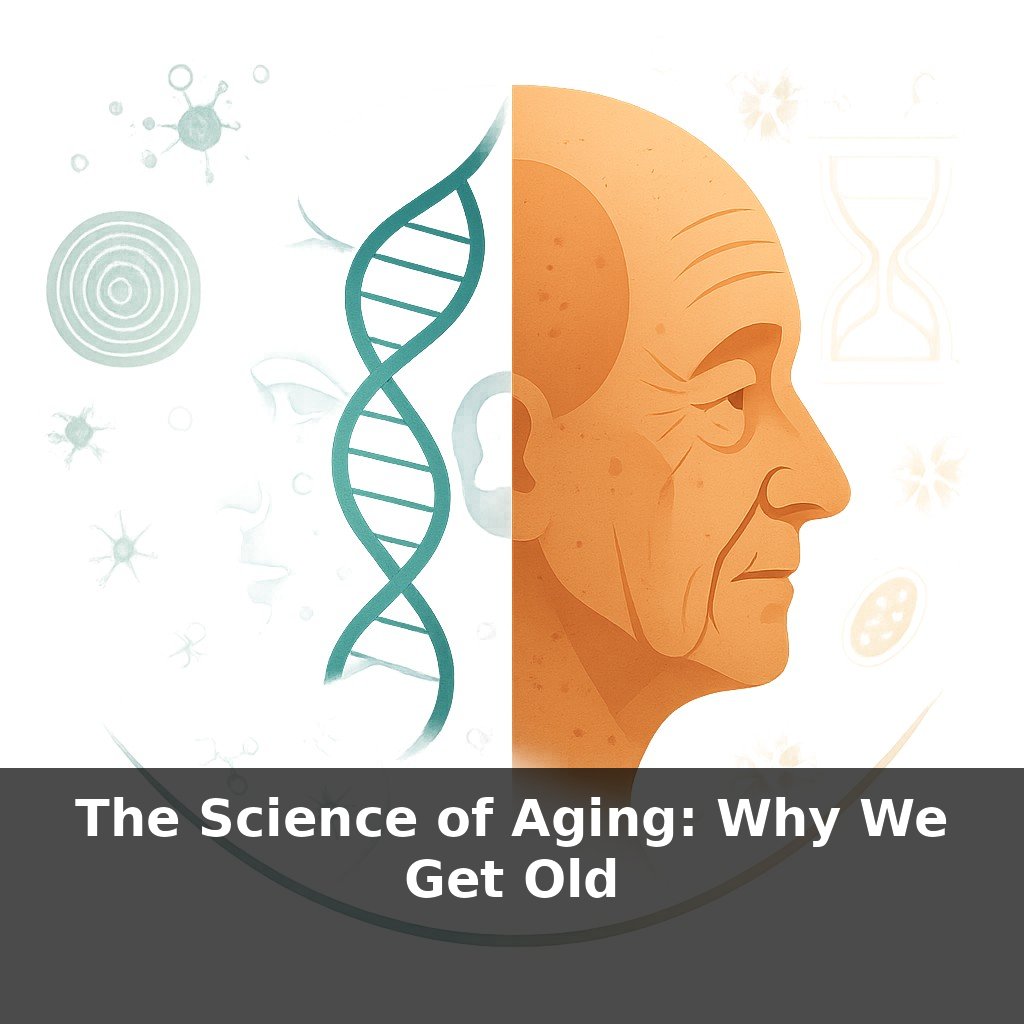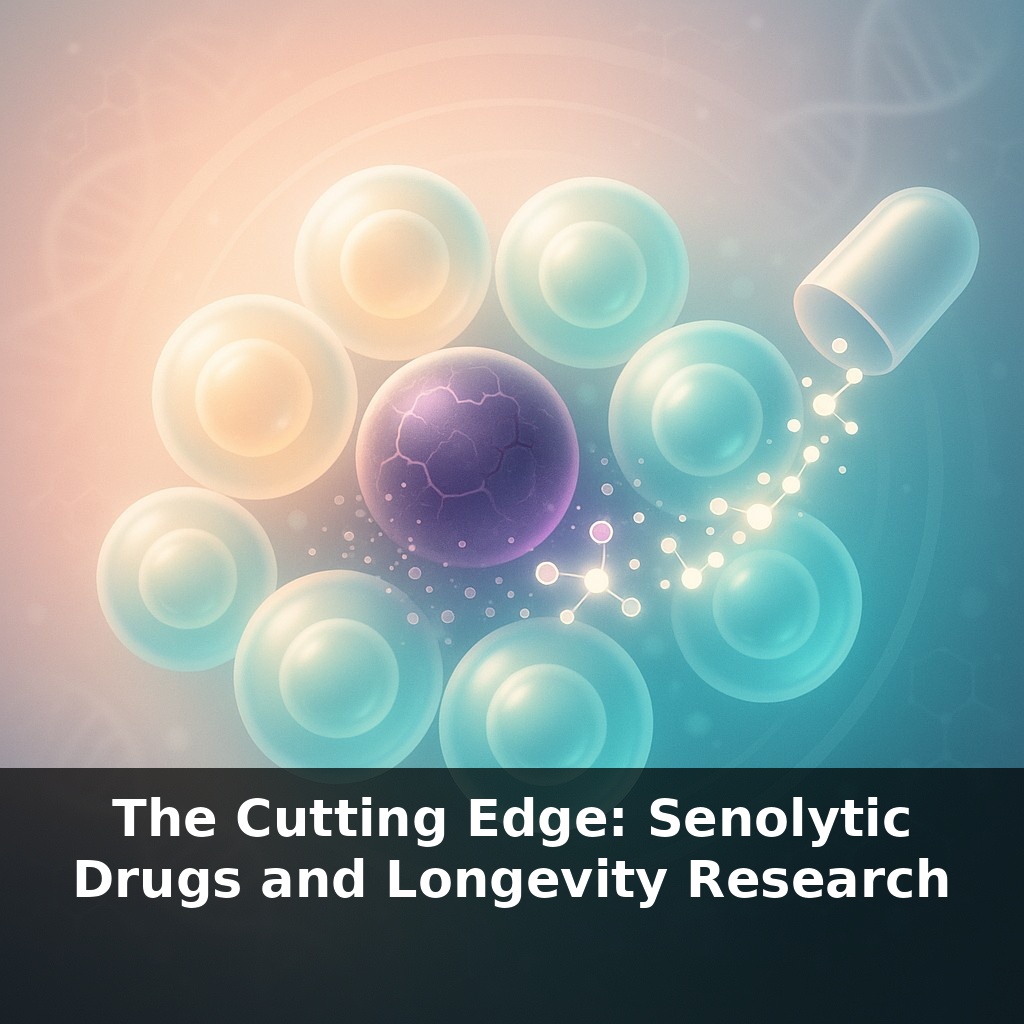
In labs right now, scientists are testing drugs not to kill cancer or infections, but to hunt down your body’s own “retired” cells. These cells stop working yet refuse to die—and early studies suggest that quietly clearing them might slow how fast we grow old.
Roughly one in seven cells in very old or diseased tissues carry a kind of biological scar: they’re alive, but broadcasting distress signals that keep nearby cells on edge. Those signals—known as the SASP—turn local neighborhoods of tissue into slow-burning inflammatory hotspots. Senolytic drugs are being designed to walk a tightrope here: strong enough to remove these problem cells, but precise enough to leave healthy ones untouched. What makes this so intriguing is the data. In mice, clearing these cells on a schedule didn’t just tweak lab values; it boosted median lifespan by about a third and improved physical function. Now, combinations like the cancer drug dasatinib paired with the plant compound quercetin, and the strawberry-derived fisetin, are moving from petri dishes into human pilot trials, where early results hint at lower inflammation and better disease markers.
In human aging, the striking part isn’t just how many “retired” cells appear—it’s where they cluster. They tend to pile up in worn‑down joints, damaged blood vessels, and organs already under stress. That’s why early senolytic trials aren’t starting with healthy 30‑year‑olds, but with people who have diabetes complications, lung fibrosis, or severe arthritis. Researchers are probing a radical idea: instead of adding yet another drug to manage each condition, could pulsed senolytic therapy every few months shift the whole system, like updating an operating system rather than patching each app?
Here’s the twist that has researchers so interested: senolytics aren’t meant to be taken every day for years, like a blood‑pressure pill. In many animal studies, they’re given in short bursts—sometimes just a few doses—then stopped for weeks or months while the body settles into a new equilibrium. That “hit‑and‑run” pattern is possible because senescent cells don’t regenerate overnight, and their removal can reset local tissue environments for a surprisingly long time.
The real engineering challenge is selectivity. Senescent cells lean on certain survival pathways—like BCL‑2 family proteins or PI3K/AKT—to avoid self‑destructing. Dasatinib, quercetin, and fisetin each hit different vulnerabilities in those pathways. That’s why some trials pair drugs: certain tissues (fat, bone marrow, blood vessels) respond better to one combination than another. Instead of a single magic bullet, we may end up with a “toolbox” of senolytics tuned to joints, brain, or cardiovascular system.
And this isn’t just about living longer mice. Early human work is probing real diseases: diabetic kidney problems, lung fibrosis, frailty, even Alzheimer’s‑related changes. In a small study in idiopathic pulmonary fibrosis, a short course of dasatinib plus quercetin modestly improved walking distance and physical function. Other trials are testing whether periodic senolytics can reduce insulin resistance, ease osteoarthritis pain, or lower circulating SASP‑related factors in older adults.
A crucial concern is collateral damage. Some senescent cells show up during wound healing, tissue remodeling, and pregnancy. Wiping them out indiscriminately could backfire. So trials typically use intermittent dosing, careful timing, and extensive safety monitoring—watching blood counts, liver function, and immune responses, and scanning for off‑target effects like excessive tissue fragility or impaired repair after injury.
Your challenge this week: follow one ongoing senolytic clinical trial on ClinicalTrials.gov—check its status, design, and what outcomes it’s measuring. As results emerge, notice whether benefits line up across organs or stay confined to specific conditions. That pattern will hint at whether we’re tweaking aging itself or just managing yet another set of symptoms.
In real life, senolytics are already being woven into surprisingly targeted strategies. At Mayo Clinic, for example, researchers tested dasatinib plus quercetin in people with stubborn lung scarring, not to “cure” the fibrosis directly, but to see if reducing the burden of problem cells would make rehab and everyday movement less exhausting. In bone research, teams are asking whether a brief senolytic pulse before starting osteoporosis drugs might let bone‑building cells work in a cleaner, less hostile environment. Think of it like running a deep malware scan on your laptop right before installing a major software update—freeing up resources so the new program can run closer to how it was designed. Other groups are layering senolytics on top of exercise or fasting regimens, probing whether lifestyle habits that enhance repair might amplify or reshape drug responses, rather than each approach acting in isolation.
If this approach scales, “healthspan planning” could become as routine as financial planning. Instead of reacting to diagnoses, midlife checkups might include periodic assays of cell‑state biomarkers, followed by tailored clean‑up cycles only when thresholds are crossed. Insurers and employers may start to view biologically younger workers as long‑term assets, pushing policy toward earlier prevention, personalized dosing schedules, and debates over who gets access first.
We’re still early enough that today’s trials may look primitive in hindsight, like dial‑up compared with fiber internet. Yet they’re forcing a new question: if we can periodically reset damaged cell neighborhoods, how do we redesign work, retirement, and care so extra healthy years feel meaningful—not just medically possible?
Start with this tiny habit: When you first open your phone in the morning, say out loud one “cell-cleanup” choice you’ll make that day—like “Today I’ll stop eating at 7 p.m.” or “Today I’ll swap my afternoon snack for green tea.” Then, before your first sip of coffee, take a single slow breath and remind yourself that you’re giving your body a chance to clear out senescent cells, just like the senolytic drugs in the episode aim to do. Keep it that small for a week—one simple cleanup choice and one slow breath—so you can quietly start living the longevity ideas from the podcast without it feeling overwhelming.