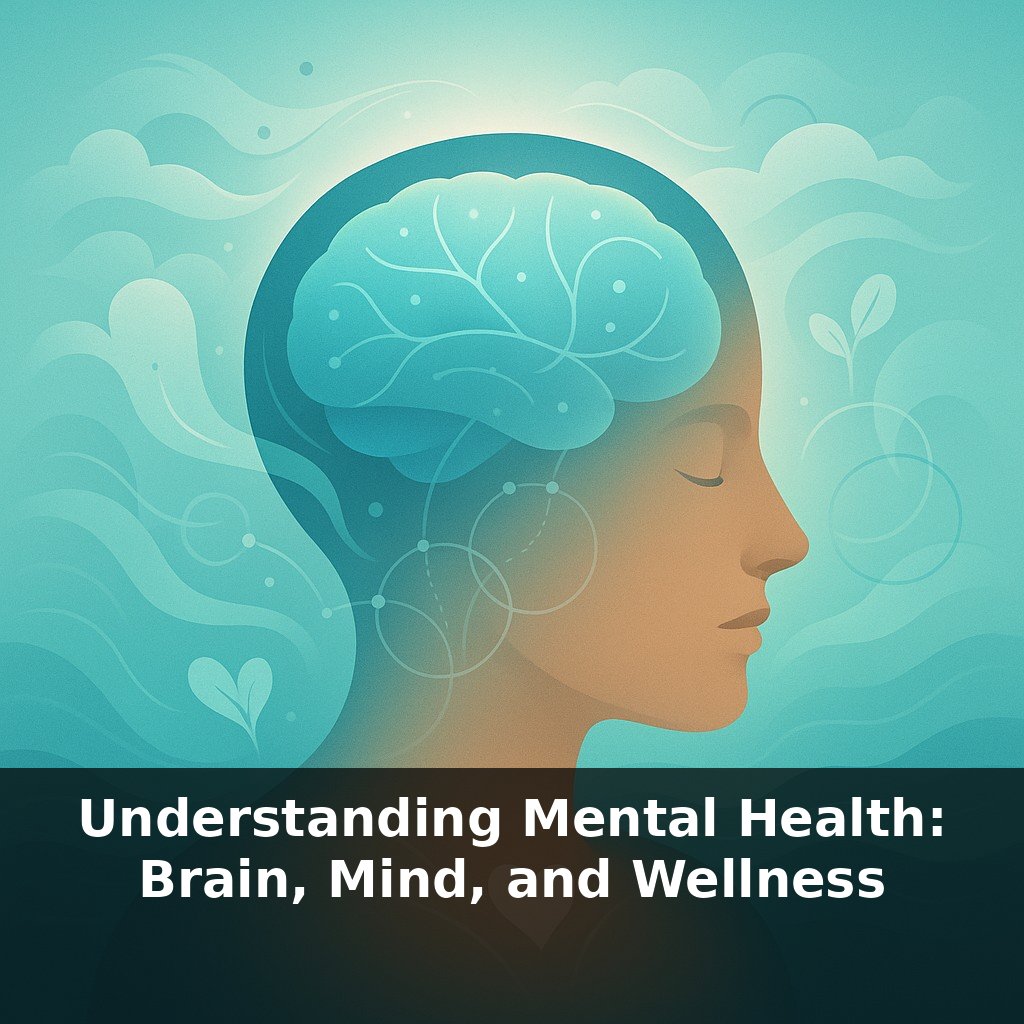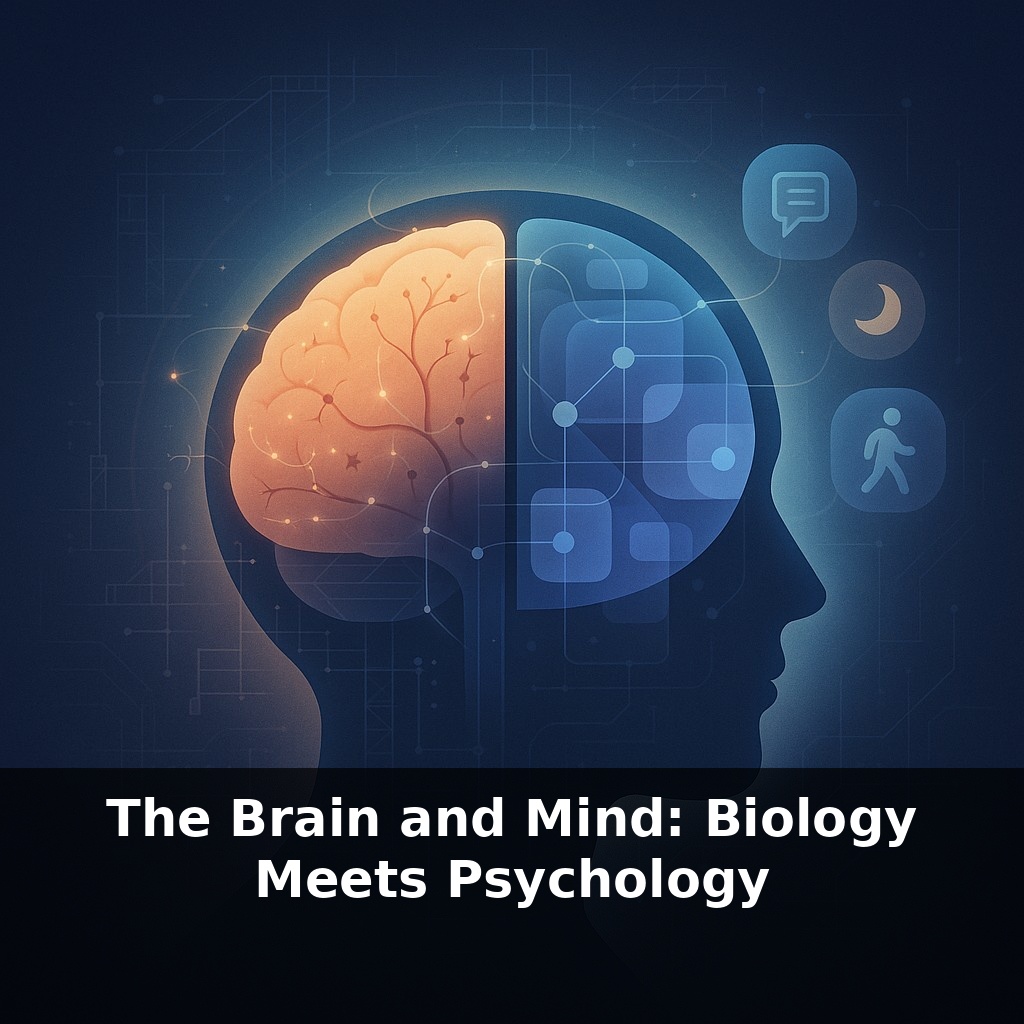
Right now, as you listen, a three‑pound organ in your skull is burning through about a fifth of all the energy in your body. Yet you can’t touch your “mind” at all. So here’s the puzzle: how does wet, electrical tissue produce a private world only you can experience?
Your brain is not a fixed “control center” installed at birth; it’s more like a living construction site that never closes. Every conversation, TikTok scroll, late‑night worry, or quiet walk is nudging circuits to strengthen, weaken, or re-route. Some changes are microscopic—adjusting the strength of a single connection. Others are architectural—entire networks shifting how they talk to each other. And here’s the twist: this remodeling is happening whether you notice it or not. Even doing “nothing” (staring out a window, daydreaming in the shower) lights up networks that link your past, future, and sense of self. Modern tools like fMRI and EEG don’t read thoughts, but they do reveal patterns: certain networks hum when you’re focused, others when you ruminate, others when you feel safe with someone. These patterns don’t just mirror your habits—they help lock them in.
Here’s where psychology walks onto the construction site. Neuroscience can show which circuits light up; psychology asks what those patterns *mean* in everyday life—why the same cue triggers panic in one person and excitement in another. Part of the answer lies in learning: your brain quietly builds “if‑this‑then‑that” rules from every win, loss, and near‑miss, like a budgeting app updating your spending categories. Reward, threat, and social feedback all get logged. Over time, those logs shape your habits, your default moods, even how easily you bounce back after stress.
Think for a moment about the sheer scale of the system doing all this tracking. Those 86 billion neurons aren’t just firing randomly; they’re organized into specialized neighborhoods and long‑distance highways. Some clusters are notorious troublemakers for mood and anxiety, others quietly stabilize your sense of who you are.
Take emotion. It’s not “from” a single spot. Fast‑acting threat detectors buried deep in the brain flag possible danger in milliseconds, while slower, more reflective regions weigh context: Is that raised voice an attack, or just your friend animatedly telling a story? When the fast system keeps winning, ordinary signals—an unread email, a text delay—can start to feel like emergencies. Over time, your brain’s “default predictions” tilt toward expecting threat, and your body starts to live in a low‑grade fight‑or‑flight mode.
Motivation works through a different set of hubs. They don’t care about what “should” matter; they track what has actually paid off in your past. If doom‑scrolling or canceling plans has repeatedly reduced discomfort in the short term, those paths get reinforced, even if they make you miserable long term. This is one reason habits can feel irrational from the outside but stubbornly logical from the inside.
Relationships plug directly into these systems. Signals of safety—eye contact, a responsive text, someone remembering a small detail about you—can dampen stress circuits and nudge your physiology toward calm. Chronic rejection or criticism can do the opposite, gradually tuning stress networks to fire more easily. Over years, this can shape how trustworthy or dangerous other people feel before you’ve even spoken to them.
Now add one more layer: beliefs about your own mind. If you’ve absorbed the idea that “this is just how my brain is,” you’re more likely to interpret rough patches as permanent traits rather than temporary states. That belief can subtly change your behavior—maybe you stop trying certain coping strategies or delay reaching out for help—which then gives your circuits fewer chances to update. In that way, a story you hold about yourself becomes another input to the very system generating the story.
Think about two people facing the same Monday morning: one laces up for a run, the other pulls the covers over their head. On the surface it looks like “personality,” but underneath, different networks are getting primed before either of them is fully awake. Past stresses, sleep quality, even last night’s scrolling all bias which circuits come online first. That bias doesn’t just color mood—it shapes what options you *notice*. When threat‑sensitive pathways are on a hair‑trigger, your attention naturally locks onto what could go wrong and filters out tiny signs of safety or possibility. Over months, this lopsided sampling can make your life look more dangerous or hopeless than it actually is, which then seems to “confirm” your worst expectations. Like a navigation app trained only on traffic jams, your internal guidance system keeps offering routes that avoid short‑term discomfort, even if they quietly steer you away from the places you care about most.
Your brain’s future isn’t fixed; it’s more like a living draft. As tools get better at reading patterns in your signals, “mental health” may shift from crisis response to early course‑correction—like spotting a spending habit before debt piles up. But greater insight brings trade‑offs: who gets to see that data, and who decides what counts as “healthy”? The next frontier won’t just be decoding brains; it will be negotiating how much control we’re willing to trade for relief.
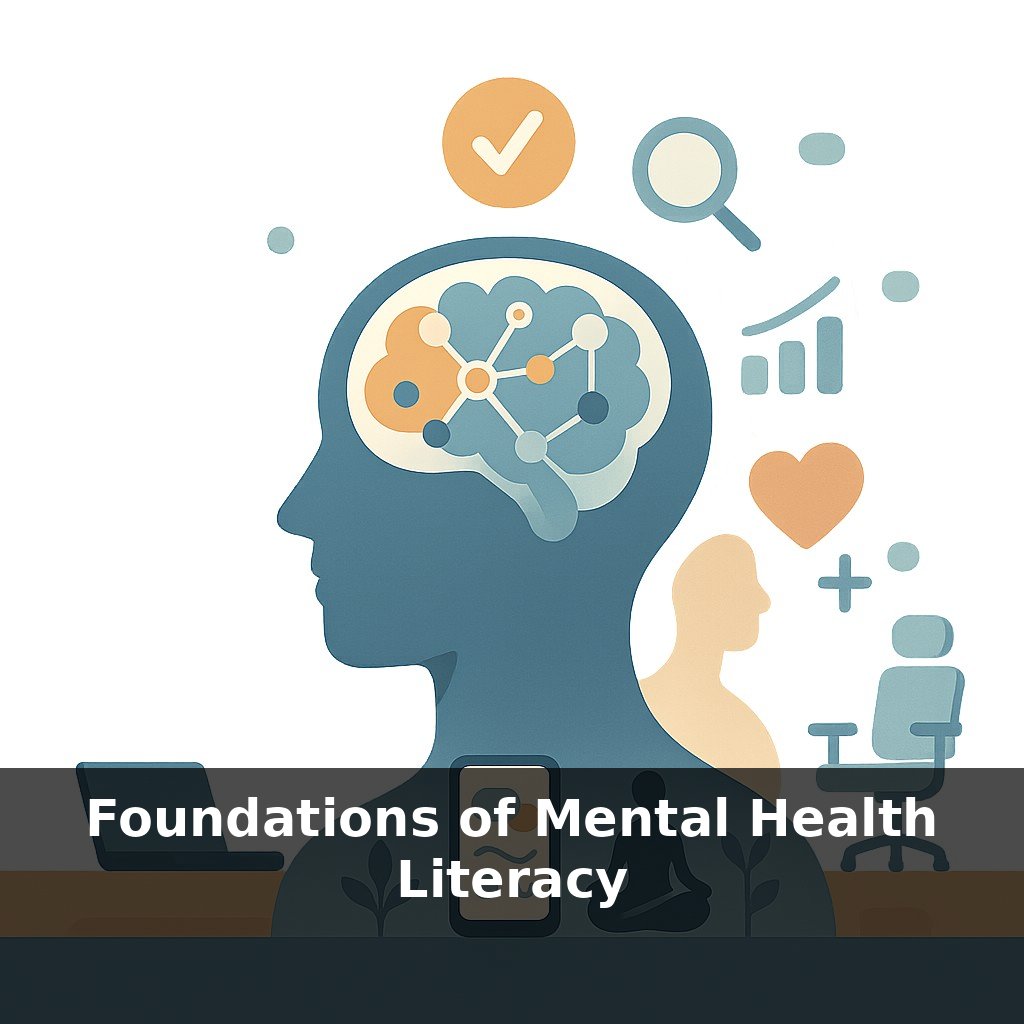
So mental health isn’t just “in your head” or “in your biology”—it’s in the ongoing loop between them. Small, repeatable choices can shift that loop, like adjusting a recipe one ingredient at a time until the dish finally tastes right. Your challenge this week: notice one tiny habit that reliably leaves you clearer or calmer, and deliberately double it.