Right now, about one in five adults is living with a diagnosable mental illness—yet many still believe there’s just one “right” treatment. You’re sitting in a doctor’s office, offered therapy, medication, or both. How do you choose, when each path changes your brain differently?
Some people walk out of that appointment thinking, “If I were stronger, I’d just do therapy,” while others quietly worry, “If I need medication, I must be really broken.” Both ideas are myths—and they can delay getting help that actually works for you. Modern research paints a different picture: recovery isn’t about proving you can manage with the fewest tools, it’s about matching the right tools to your specific situation, then adjusting as your life and symptoms change. In practice, that might mean starting with one approach, like structured sessions focused on concrete skills, and later adding another, such as a low-dose prescription, when stress spikes or progress stalls. Think less “final decision,” more “iterative project plan” that you and your providers revise over time, based on data—not on shame, pride, or outdated rules about the “right” way to heal.
To do that well, you first need a clearer map of what “options” actually exist. Many people only hear, “Do you want pills or talking?” and never learn that evidence-based care spans multiple layers: trauma-focused work, skills-based approaches like CBT or DBT, medications that act on different systems, and add-ons like exercise, sleep work, peer support, or neuromodulation. Think of it more like building a custom tech stack for your mind—different components handle stability, performance, security, and backups—rather than downloading a single all-in-one app and hoping it covers everything.
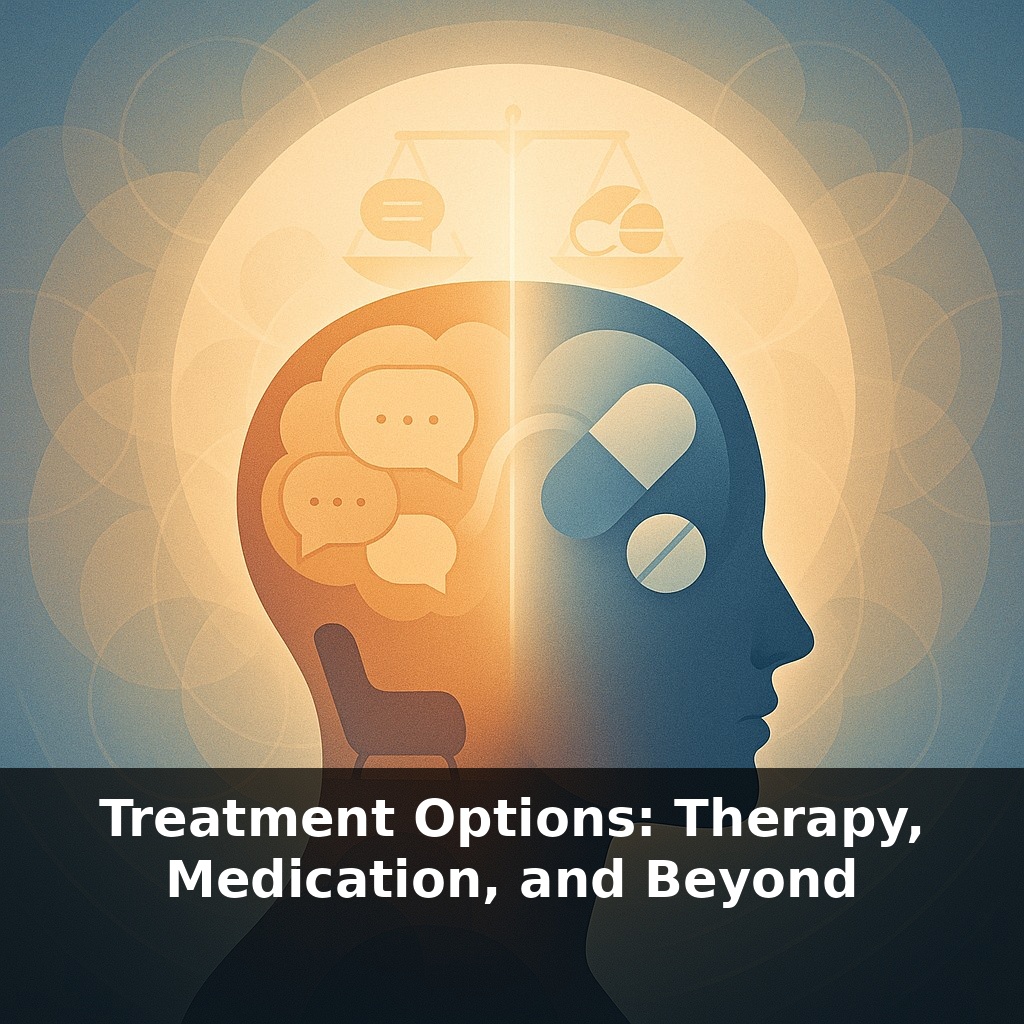
Think of this section as zooming in on three big “columns” you can combine: talking-based approaches, biologically-focused tools, and everyday supports that quietly move the needle.
On the talking side, not all sessions look the same. Some are short-term and skills-heavy—like CBT, where you and your clinician run small, structured experiments on thoughts, behaviors, and situations. Others, like DBT, add emotion-regulation and crisis tools, which is why they’re often used for chronic suicidality, self-harm, or intense mood swings. Trauma-focused work might use exposure or EMDR to help your brain file old experiences differently, so they aren’t constantly “popping up” as alarms. And for conditions like schizophrenia or bipolar disorder, family-focused and social-skills therapies help the people around you respond in ways that reduce relapse risk.
On the biology side, medications fall into distinct families. For depression and anxiety, SSRIs and SNRIs are common first-liners; for bipolar disorder, mood stabilizers or atypical antipsychotics take center stage; for psychosis, antipsychotics are the foundation, while therapy supports insight, coping, and functioning. Neuromodulation—like rTMS or ECT—enters the picture when several trials of meds and therapy haven’t worked, especially for severe or psychotic depression. These aren’t “giving up” options; they’re escalation steps in a planned ladder of intensity.
Then there are the everyday levers people often underestimate. Sleep timing, caffeine and alcohol use, movement, and social contact each nudge symptom severity. Aerobic exercise can be especially powerful in mild to moderate depression, but in more severe or psychotic conditions it’s usually a complement, not a standalone answer. Peer groups and support programs add something neither meds nor 1:1 sessions can fully provide: shared language, practical tips from people living it, and a sense that you’re not the only one whose life looks like this.
The art is in sequencing and combining these: what to start, what to hold in reserve, when to step up intensity, and when to deliberately step down.
Someone with panic attacks might start with brief, skills-heavy sessions focused only on surviving the workday—practicing how to ride out a surge of fear in a meeting, or on the subway, without escaping. If the attacks shrink but a heavy, numb mood lingers, that’s often when a clinician suggests adding a small-dose medication or structured exercise plan to widen the gains beyond “just not panicking.”
For another person with bipolar disorder, the order flips. Stabilizing sleep and mood with meds may come first, because wild swings make it nearly impossible to use new coping tools consistently. Once things level out, therapy can zoom in on rebuilding routines, work goals, and relationships that got blasted during severe episodes.
One way to picture it—borrowing from the world of cooking—is like planning a week of meals. You don’t need every spice and technique at once. You choose a main ingredient (like therapy or meds), then add sides and seasonings (peer support, exercise, family work) based on taste, nutrition needs, and what your real life actually allows right now.
Within a decade, “what should we try next?” may be guided less by guesswork and more by data: DNA panels hinting at side‑effect risks, phone sensors flagging early mood shifts, even wearables nudging care teams before a crash. Policies will have to catch up—deciding who owns this data, how insurers use it, and when tools like psychedelics or brain implants are a safety net versus a step too far. Your future “care plan” might feel closer to a personalized dashboard than a single prescription.
You don’t have to map this out alone. Think of yourself as lead designer, with clinicians, friends, and even apps as your project team, each offering different “features” you can toggle, test, or retire. Your challenge this week: list three supports you haven’t tried yet—formal or informal—and rate how realistic each one feels for the next month.