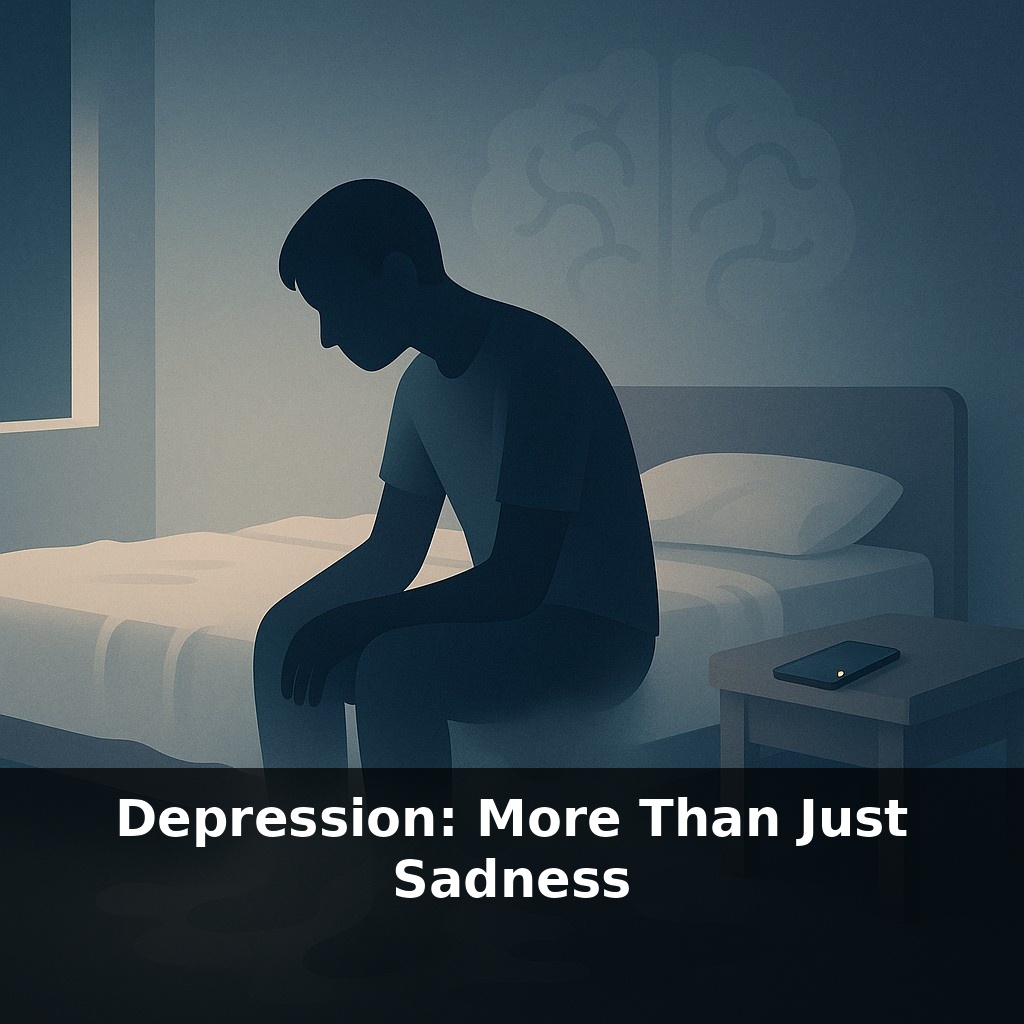
Right now, somewhere in the world, depression is stopping someone from brushing their teeth, answering a text, or even getting out of bed—yet to others, they just seem “a bit off.” How can an illness be invisible to most people and still shut a life down so completely?
You might know someone who jokes, “I’m so depressed,” after a bad day—but still goes to work, answers messages, posts memes. From the outside, it looks like a mood. On the inside, it can feel like walking through wet concrete: every thought heavier, every task slower, every joy strangely muted. This disconnect between how depression looks and how it feels is one reason it’s so widely misunderstood—and so often missed.
Research shows it doesn’t just affect emotions; it can fog thinking, disrupt sleep and appetite, and change how the body handles pain and energy. People may seem “lazy” or “disengaged” when they’re actually running on an almost empty battery. That gap between appearance and reality fuels stigma, delays help-seeking, and leaves many blaming themselves for what is, in fact, a treatable medical condition.
On top of all that, depression can quietly rearrange priorities, values, and relationships. Hobbies that once defined someone may feel pointless; social plans start to look like obligations rather than sources of connection. People might show up at work and hit deadlines, yet feel increasingly detached from their own lives, like they’re watching someone else play their character. Physically, they may move more slowly or feel constantly restless. Emotionally, they can swing between numbness and sudden tears, often with no clear trigger—confusing both themselves and those around them.
When professionals talk about depression, they’re not just describing a “really bad mood.” They’re referring to a cluster of symptoms that tend to travel together, show up most days for at least two weeks, and noticeably get in the way of living. That includes emotional pain, but also things like slowed thinking, exhaustion that sleep doesn’t fix, and a kind of emotional flatness where even good news barely registers.
Clinicians look for patterns across several areas: mood, interest, sleep, appetite, movement, energy, concentration, and thoughts about worth or death. Someone doesn’t need to have every symptom, and two people with the same diagnosis can look very different. One person might cry constantly; another might feel nothing at all. One might sleep 12 hours; another wakes at 3 a.m. like clockwork. This variation is part of why depression is so often misread as personality, “burnout,” or just a rough patch.
Biology also plays a role, but not in the cartoon way we often hear about. It’s not simply “low serotonin” that a pill “tops up.” Multiple systems are involved: stress hormones like cortisol, immune and inflammatory pathways, brain circuits that weigh rewards and threats, and even gut-brain interactions. Genetics can raise or lower risk—especially if close relatives have had serious episodes—but environment, trauma, chronic stress, medical illnesses, and substance use all interact with that vulnerability.
Because the brain is so interconnected, changes in one system ripple through others. For example, long-term stress can sensitize the brain’s alarm networks, making neutral events feel threatening, while dulling circuits that usually generate motivation and pleasure. Over time, people can start organizing life around avoiding pain rather than pursuing meaning, not because they’ve “given up,” but because their internal signal system is miscalibrated—more like a phone whose battery drops from 80% to 10% in an hour, no matter how carefully you use it.
Crucially, none of this erases agency or hope. It just means that effort alone often isn’t enough; the conditions under which effort happens—brain chemistry, social support, therapy, lifestyle, medication—matter enormously.
Some signs only show up when you look closely at daily life. A student who used to finish assignments early might now stare at the same page for an hour, rereading the same paragraph because their focus keeps slipping. A parent may keep everyone else’s schedule running while letting their own health appointments slide, telling themselves they’ll “catch up later” for months on end. Small decisions can start to feel strangely high-stakes—choosing dinner, replying to a message—so they get postponed until they quietly disappear.
Think of it a bit like a laptop that technically turns on but runs every program in slow motion: nothing is outright “broken,” yet everything takes more effort, and the owner keeps blaming themselves for not typing faster rather than checking the system. In real life, that might look like declining invitations, avoiding eye contact, or giving short “I’m fine” answers, not because nothing is wrong, but because explaining feels exhausting and the person isn’t sure their experience will be believed.
Around the corner, care may look very different. Instead of trial‑and‑error meds, data from sleep trackers, typing speed, or voice tone could flag early shifts in mood, like a fitness watch warning before a pulled muscle. Insurance rules, workplace policies, and school supports will decide who actually benefits. Your challenge this week: notice where systems around you quietly make it easier—or harder—to talk about and respond to low mood.
Recovery rarely arrives as a dramatic turning point; it’s more like learning a new recipe, adjusting ingredients until it finally tastes right. Structured care, small daily routines, and support from others can gradually rewire habits and expectations. The goal isn’t to “snap out of it,” but to build a life that quietly stops feeding the illness.
Before next week, ask yourself: 1) “Looking at my last few days, when do my symptoms go beyond ‘feeling sad’—like numbness, exhaustion after simple tasks, or losing interest in things I used to enjoy—and what patterns (time of day, people, situations) do I notice?” 2) “If I treated my depression more like a medical condition (the way the episode compared it to diabetes or heart disease), what’s one specific thing I’d change today—who I’d tell, what I’d ask my doctor, or how I’d adjust my routine—so I’m not trying to ‘willpower’ my way through it?” 3) “Thinking about the examples in the episode of people hiding their symptoms behind work, humor, or being ‘the responsible one,’ where might I be doing something similar, and what would it look like to let just one trusted person see what’s really going on this week?”