“Most people can stick to a strict diet for about as long as a vacation—then real life takes over. You’re juggling work, family, cravings, and a budget, yet you still care about your health and the planet. So how do you eat in a way your body—and your lifestyle—can actually live with?”
The catch is that “sustainable” doesn’t just mean buying more vegetables or swapping burgers for beans. It’s the pattern underneath your everyday choices—the routines that quietly repeat when you’re tired, stressed, or not thinking about nutrition at all. That pattern is shaped less by willpower and more by your environment: what’s in your fridge, how your kitchen is set up, where you shop, even who you usually eat with. Small defaults add up. A bowl on the counter filled with fruit instead of snacks, a go‑to cheap lentil dish on nights you’d usually order in, or deciding which two lunches this week will be meat-free—these are the kinds of shifts that gradually tilt your pattern. In this episode, we’ll look at how to design those defaults so that they support both your goals and your real, messy life.
Think of this as zooming out from individual meals to the “season” of your eating life. Nutrition science gives us a few solid anchors: most people do best when they eat enough (not too little, not way too much), hit their basic vitamin, mineral, and protein needs, and lean heavily on plants with thoughtful amounts of animal foods. But the details—how often you cook, whether you love spicy food, how much time you have on weeknights—matter just as much. Rather than chasing perfect days, we’ll map out a pattern that works *on average*, across hectic weeks and calmer ones, so healthy choices feel like your new normal, not a special project.
A useful way to move from “nice idea” to “this is just how I eat now” is to decide what *always*, *often*, and *rarely* look like for you.
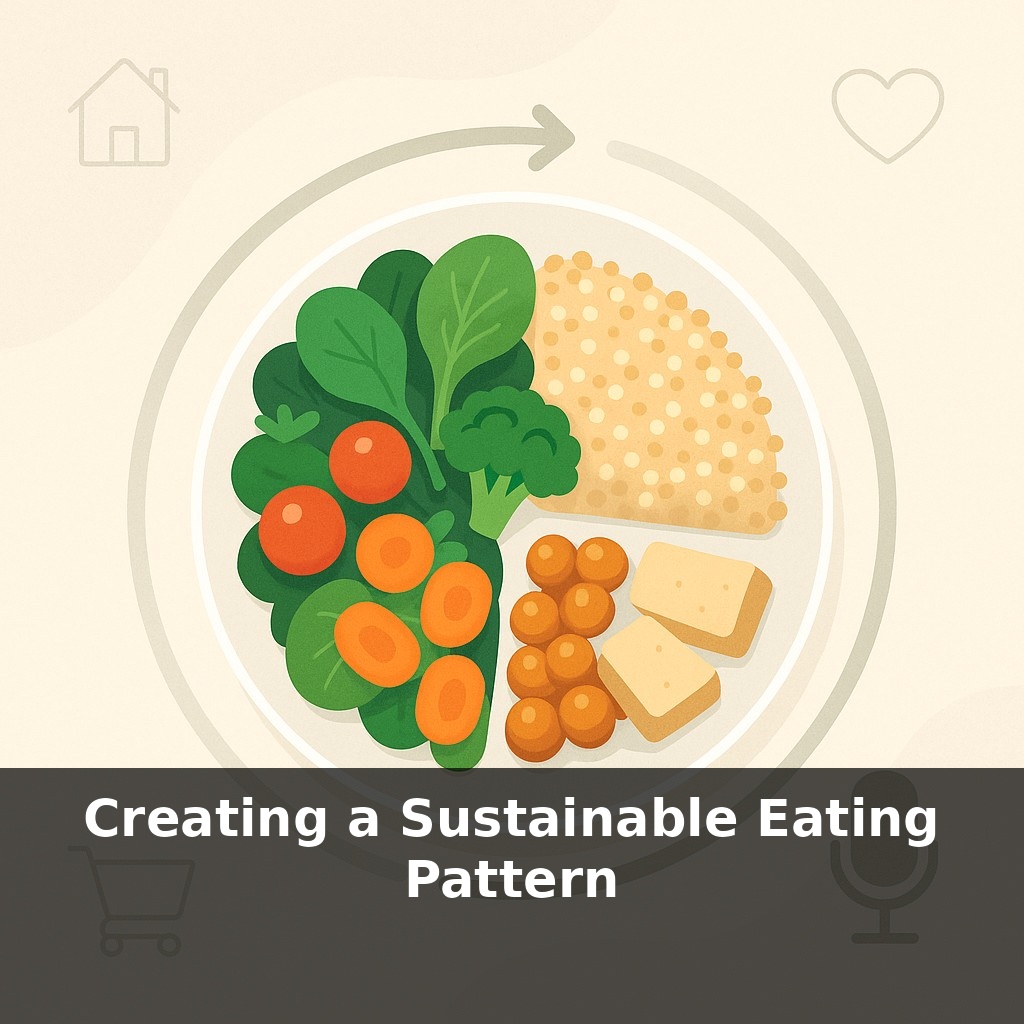
“Always” foods and habits form your backbone. For many people, that’s something like: vegetables at lunch and dinner, some source of protein at every meal, and mostly water or unsweetened drinks. The details are yours: maybe it’s frozen broccoli, canned tomatoes, tofu, eggs, yogurt, or leftover chicken. The point is to choose a few simple rules that work even on your worst days, not only on your best.
“Often” is where you tilt toward both health and a lighter footprint without needing perfection. Research points toward mostly plant-based, minimally processed staples: beans, lentils, whole grains, nuts, seeds, seasonal produce. Add modest portions of animal foods you enjoy and can afford—fish, poultry, eggs, dairy, or smaller amounts of meat—and favor options with lower environmental impact when you can. This is where flexitarian eating lives: plenty of plants, animal foods as supporting actors, not the entire cast.
“Rarely” covers the things you don’t want to ban, but don’t want running the show: ultra-processed snacks, sugary drinks, oversized portions of red and processed meats, impulse takeout that always leaves you overstuffed. Deciding that these are “sometimes foods” ahead of time helps you enjoy them deliberately instead of by default.
Behavior strategies tie it all together. Meal planning doesn’t need color-coded spreadsheets; it might just mean picking two breakfasts, two lunches, and three dinners to rotate this week. Mindful eating isn’t sitting in silence with a raisin; it can be pausing mid‑meal to ask, “Am I still hungry, or just finishing my plate?” Even a quick check like that raises the odds you’ll stay close to the plan that actually suits you.
Over time, you’re curating a personal menu that fits your culture, budget, and tastes while quietly meeting your nutrient needs and trimming waste. Like choosing which routes you usually drive in your city, you want a few dependable paths that get you where you’re going—with enough flexibility to take detours when life demands it.
Think of your week like planning a short trip, not designing a fantasy vacation. Instead of asking, “What’s the perfect menu?” ask, “What’s my default route on busy days?” For example, choose a single “always” breakfast that feels doable: overnight oats with fruit, or eggs plus leftover veggies. Then add two “often” lunches you can assemble in 10 minutes—say, a chickpea salad with whatever crunchy veg is around, and a whole‑grain toast with hummus and sliced tomato.
To keep “rarely” foods in their place without banning them, decide *where* they live: maybe ice cream stays out of your freezer but is totally fair game on a walk with a friend; maybe delivery is a Friday tradition instead of a nightly coin flip.
You can also rotate “theme nights” the way cities host recurring markets: bean‑based Monday, grain‑bowl Wednesday, frozen‑veg stir‑fry Friday. The themes stay the same, but the details change with your mood, budget, and what needs using up.
A fridge that “checks in” with you, a grocery app that maps your taste buds like a playlist, and a stove that suggests low‑carbon tweaks as you cook—all of this is getting close. Think of it less as a bossy food cop and more as a co‑pilot, nudging you toward options you’d actually enjoy. Workplace cafeterias, meal kits, and even vending machines may start quietly rearranging choices too, so the easiest path is also the one that treats your future self—and the planet—a bit more kindly.
Over time, your plate becomes a kind of personal map: favorite staples are the main roads, seasonal foods the side streets you explore, and new recipes the unmarked paths you test with curiosity. You won’t follow the same route every day—and that’s the point. The goal isn’t rigid control but building enough familiarity that small course‑corrections feel natural, not like failure.
Start with this tiny habit: When you open the fridge to decide what to eat, place one colorful plant food (like a carrot stick, a few grapes, or a handful of spinach) on your plate first. Don’t worry about changing the rest of your meal—just add that one plant food you already have on hand. Do this once a day, even if the rest of your choices stay the same for now. Over time, that “one plant first” move will start to nudge your whole plate in a more sustainable direction without feeling like a diet.