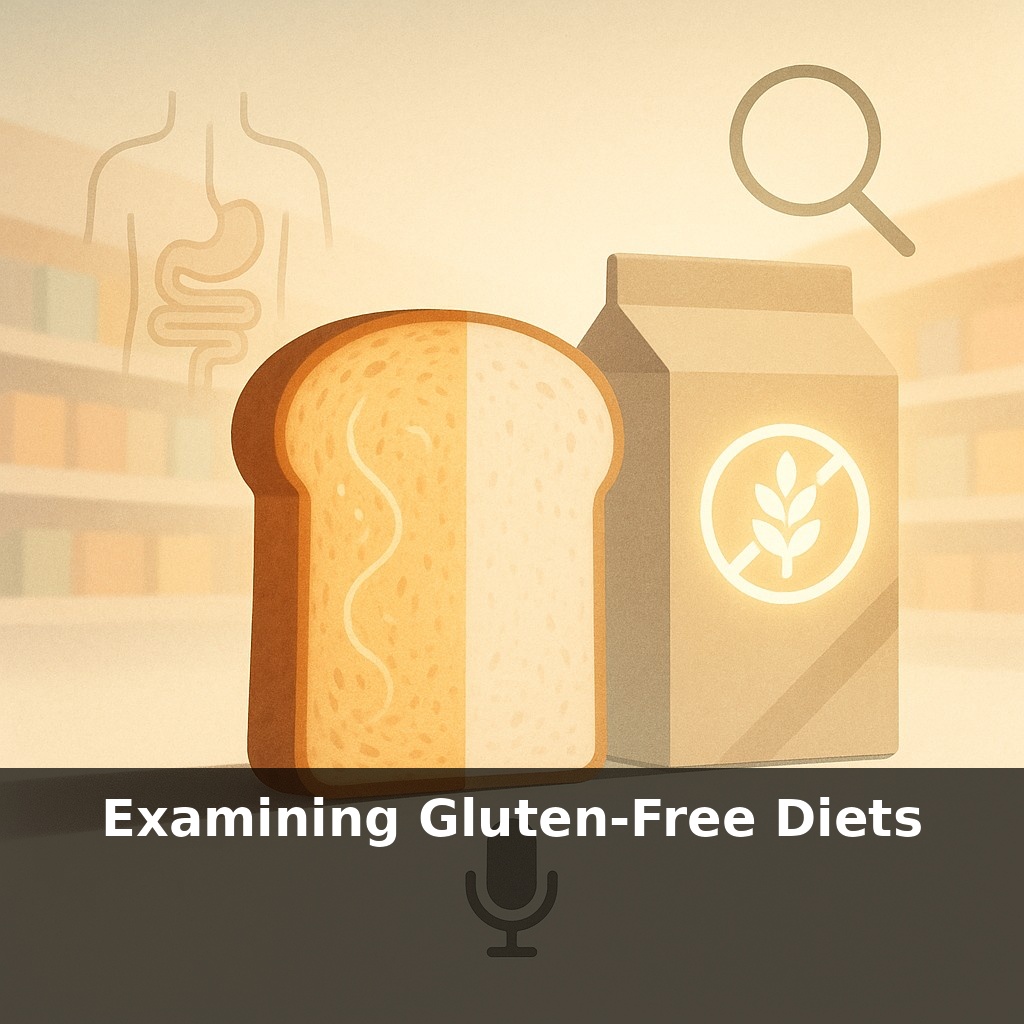
One slice of ordinary bread can contain enough gluten to overwhelm someone with celiac disease for the entire day—yet most gluten‑free products are bought by people without it. Today, we’re stepping into that paradox: medicine for a few, massive trend for everyone else.
Walk down any supermarket aisle and “gluten‑free” jumps out like a limited‑edition label: on cookies, chips, even water. Sales of gluten‑free products have exploded far beyond the number of people who actually need them, blurring the line between medical treatment and lifestyle choice. Celebrities credit the diet with weight loss, wellness blogs blame gluten for brain fog and bloating, and restaurants badge “GF” like a health halo—even on foods that never contained gluten in the first place. Meanwhile, genuinely affected patients still scan menus like detectives, because a few stray crumbs can undo weeks of careful eating. This clash between necessity and trend raises bigger questions: who truly benefits, who pays more for less nutrition, and how do we separate data from hype when a medical diet goes mainstream?
Much of the confusion starts in the gray zone between clear diagnosis and vague discomfort. Some people feel better when they cut out certain breads or pastas, but is that about gluten itself, the type of wheat, the additives, or simply swapping ultra‑processed foods for simpler ones? At the same time, lab tests, gene screening, and biopsy criteria have sharpened who truly needs strict avoidance. Layer on top the booming food industry, wellness influencers, and social media testimonies, and you get a noisy landscape where lived experience, marketing, and science are constantly jostling for the microphone.
Here’s where the story gets more nuanced. There isn’t just one “gluten problem” but several overlapping groups, each with different stakes.
At one end are people with a straightforward wheat allergy. Their immune system reacts quickly to wheat proteins—hives, wheezing, even anaphylaxis. For them, eating a wheat cracker is more like a wasp sting than a slow, simmering condition: the reaction is immediate, obvious, and usually diagnosed in childhood with standard allergy testing.
Then there’s a murkier category: non‑celiac gluten sensitivity (NCGS). These are adults who test negative for celiac and wheat allergy, yet report reproducible symptoms tied to wheat‑based foods—gut discomfort, tiredness, sometimes headaches—that ease when those foods are removed and return when they’re reintroduced. The catch? In blinded trials where people don’t know what they’re eating, some react just as strongly to other components in wheat, like FODMAP carbohydrates, as they do to gluten itself. That suggests a subset may be “wheat‑sensitive” or “FODMAP‑sensitive,” not specifically gluten‑sensitive.
Zoom out further and you have the largest group: people avoiding gluten for general wellness, performance, or because it “feels cleaner.” Here, behavior is often shaped less by lab results and more by stories—an athlete who felt lighter off bread, a friend whose skin cleared up, a podcast claiming grains are inherently inflammatory. When researchers actually compare well‑balanced gluten‑containing diets to gluten‑free ones in healthy adults, the differences in weight, energy, and blood markers are usually small or nonexistent, provided overall quality and calories are matched.
Food companies operate in this gray zone. Slapping “gluten‑free” on snacks and sweets instantly targets the medically‑affected but also the wellness‑seeking majority. Formulating those products isn’t trivial: without gluten’s structure, manufacturers lean on refined starches, gums, and extra fat or sugar to mimic chew and softness. It’s a bit like trying to rebuild a stone bridge with sand and glue—possible, but you need more “glue” to hold it together, and the end result isn’t always as sturdy or nourishing.
Think about two diners ordering from the same menu. One has strict instructions from a specialist; a tiny ingredient mix‑up could derail months of recovery. The other is experimenting, crossing off whole sections of the menu based on a podcast they heard last week. They’re both saying the same words to the server, but the stakes could not be more different. That gap in stakes is where many misunderstandings—and social friction—live: coworkers teasing someone for being “picky,” or friends assuming anyone skipping bread is chasing a trend.
Now layer in hidden trade‑offs. Swap a hearty grain salad for a gluten‑free version made from white rice and you might quietly lose fiber and key micronutrients, even if the meal looks just as “healthy” on Instagram. Restaurant chefs may strip back diverse grains rather than learn how to prepare them safely, shrinking options instead of expanding them. Over time, this can reshape food culture itself, privileging what’s easy to market over what’s truly nourishing.
Clinical tools are evolving fast. Instead of vague “gluten makes me feel off,” future care may look more like a flight log: specific immune markers, symptom timelines, and food patterns mapped together. As enzyme pills and edited grains enter the scene, rules that once felt like brick walls may become revolving doors—sometimes open, sometimes shut. The real challenge will be teaching people when to walk through, and when that door should stay firmly closed.
As research sharpens and trends keep shifting, the real skill may be learning to “tune” your own response to gluten like adjusting the volume on a radio—quiet for most, muted for some, and very loud for a few. Instead of copying the crowd’s settings, the next step is pairing evidence, medical guidance, and your own signals to find a level that actually fits you.
Start with this tiny habit: When you grab any packaged food from your pantry or fridge, read just the first two lines of the ingredient list and look specifically for the words “wheat,” “barley,” or “rye.” If you spot one, simply say to yourself, “This is not gluten-free,” and put it back once this week in favor of something naturally gluten-free like rice, potatoes, or plain yogurt. Over time, this tiny check will train your eyes and brain to quickly spot hidden gluten without feeling overwhelmed.