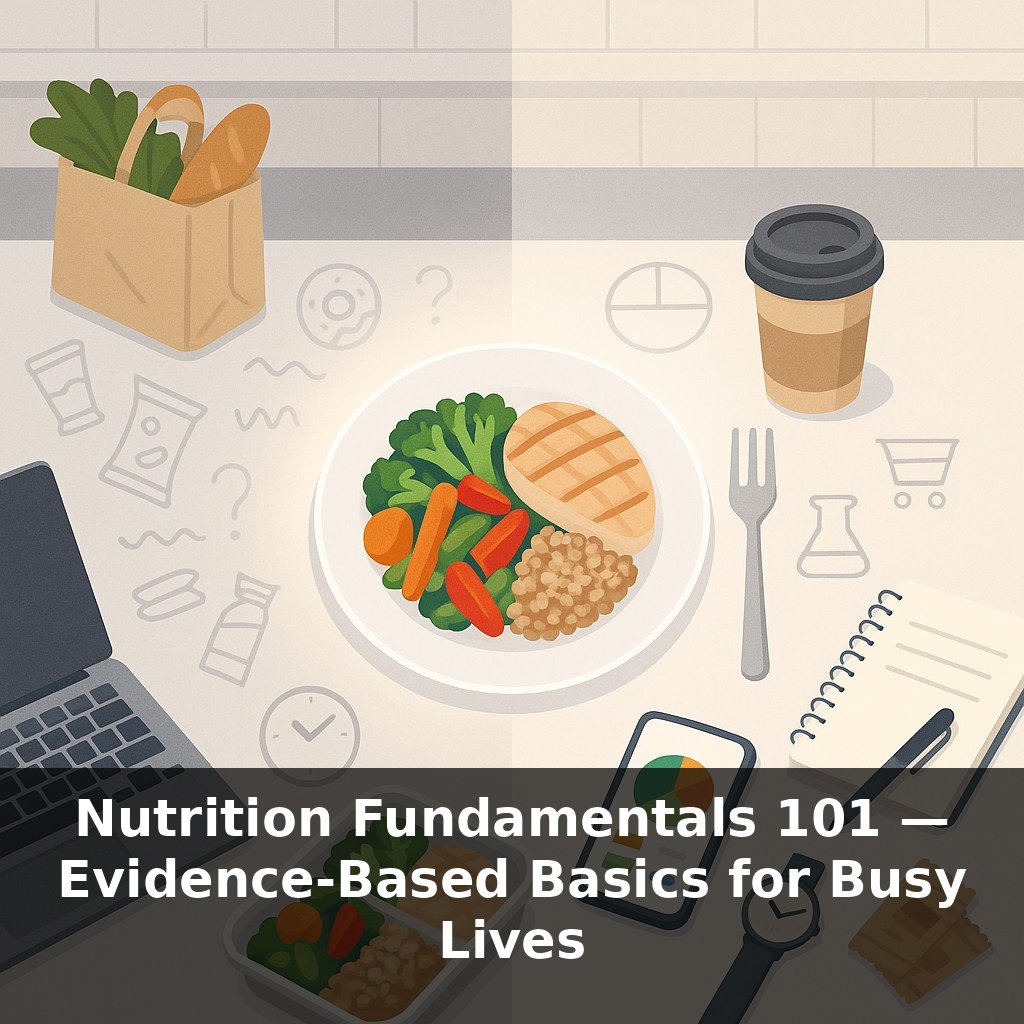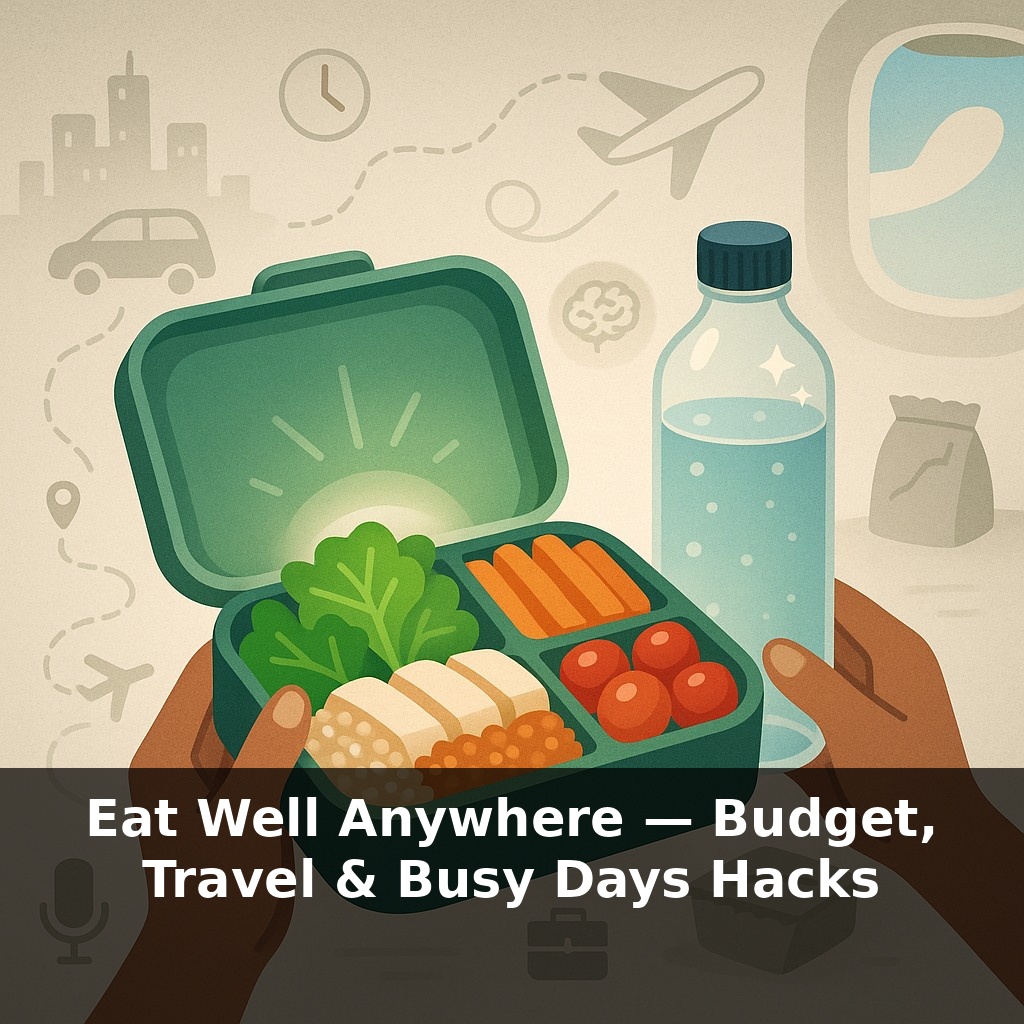
You can eat better on the road than at home—and spend less doing it. A home‑packed lunch averages about $3, yet most of us still grab the $11 takeout. You race through airports, late meetings, long commutes… and the vending machine quietly wins. Why does “busy” hijack our food choices?
Flights quietly steal water from your body long before they serve you snacks. Cabin air is drier than most deserts, and being just 2% under your ideal hydration can slow your thinking by about 10%. Add a tight connection, a delayed train, or back‑to‑back meetings, and your brain is trying to do high‑stakes decision‑making while running on yesterday’s fuel and half a water bottle.
This is exactly when “I’ll just grab something later” turns into $20 of whatever’s closest. Not because you don’t know what’s healthy, but because your environment is pre‑loaded against you: limited options, high prices, tempting displays, and no time.
In this episode, we’ll treat your busy days and travel days like a logistics puzzle: how to get the most nutrients, stability, and focus for the fewest dollars, decisions, and minutes—no kitchen required.
Those “I’ll grab something later” moments are really tiny logistics failures, not personal failures. Your brain is doing triage: make the meeting, catch the train, answer the email. Food becomes whatever fits between calendar blocks. That’s why the real leverage isn’t more willpower; it’s redesigning your defaults. Think of your day like a city’s transit map: a few well‑placed “stations” (backpack, desk drawer, glove compartment, carry‑on) can cover most hunger emergencies if they’re stocked with the right things—foods that don’t spoil fast, travel well, and actually keep you full. Now we’ll turn those points into an automatic safety net.
Most people try to “eat healthy” by starting with *recipes*. For busy and travel days, it works better to start with *rules*. The details can change—country, airport, late‑night office—but the rules stay the same: maximize nutrients per dollar, minimize decisions, and respect whatever storage you have.
First pillar: **nutrient density per dollar.** Ask two questions before you buy anything: 1) “How long will this keep me full?” 2) “How many nutrients am I getting for this price?” Staples like beans, lentils, oats, frozen veg, and peanuts or mixed nuts usually beat bars, pastries, and “snack packs” on both counts. That’s not about perfection; it’s about leverage. One $5 airport pastry might carry you an hour. The same $5 in oats, bananas, and peanut butter—bought outside the terminal—can cover several solid breakfasts.
Second pillar: **logistics.** On-the-go eating is won or lost by shelf life and portability. Think in three buckets:
- **Always-on-hand:** foods that live in your bag, desk, or car for weeks. Examples: dry roasted nuts, trail mix, low-sugar protein bars, dry oats, tuna or salmon pouches, whole-grain crackers. - **48-hour items:** things you can buy at a corner store or supermarket and use over a day or two: yogurt cups, baby carrots, cherry tomatoes, apples, oranges, pre-washed salad mixes, rotisserie chicken. - **Immediate-use:** items you only buy when you’re about to eat: hot bar veggies, soup, cooked grains, fresh sandwiches you can “upgrade” with your own add-ins.
This lets you pair cheap, non-perishable “bases” you control with whatever fresh options are available locally. You’re not hunting for the perfect meal; you’re assembling from components.
Third pillar: **decision frameworks.** Instead of scanning a menu or shop shelf for what looks tasty, run a quick checklist:
- Can I anchor this meal with **lean protein**? (Beans, eggs, fish, poultry, Greek yogurt, tofu, lentils, cottage cheese.) - Do I have **at least two plant sources**? (Veg plus fruit, or two different veg.) - Is there a **slow carb**? (Oats, brown rice, quinoa, whole-grain bread, potatoes with skin, beans, lentils.) - Where’s my **fat** coming from, and is it modest? (Nuts, seeds, avocado, olive oil, fattier fish, or just what’s cooked into the meal.)
In practice, you might pick up: a simple sandwich, a side salad, and a piece of fruit—or a burrito bowl with beans, fajita veg, and salsa, while skipping the extra chips and queso. You’re not ordering “diet food”; you’re quietly checking boxes.
One way to think about it: you’re acting like your own primary-care doctor doing a quick “vitals” check on every meal—protein, plants, slow carbs, reasonable fats. If those vitals look good most of the time, the odd airport cookie or late-night slice has far less power to derail you.
Think of your “busy day fuel” kit the way a chef thinks about a mise en place: a small set of prepped building blocks that can turn almost anything into a meal. Your version might be: a zipper bag of plain oats, a couple of nut-butter squeeze packs, a small container of mixed nuts and seeds, a few tea bags, and one or two protein options you actually like.
Now picture walking into three totally different spots:
At a gas station, that kit plus a banana and a black coffee becomes breakfast. In a hotel lobby, you combine it with hot water, a piece of fruit, and maybe a boiled egg from the buffet. At a late-night pharmacy, you add a single-serve Greek yogurt and a bag of pre-cut veggies.
Same tiny core, three different environments, three workable meals.
You can do the same with restaurant menus. Decide your “default order” *before* you’re hungry: at burger places, you always go bun + extra lettuce + side salad; at Mexican spots, it’s a bowl with beans and fajita veggies; at cafés, it’s soup + half sandwich. The specifics don’t matter as much as having those pre-chosen “scripts” ready.
Airport food courts and highway stops are becoming quiet testing grounds for the next wave of nutrition tech. Instead of endless menus, you might soon get auto‑generated “good, better, best” bundles based on your budget, step count, and time until your next meal. Think less like hunting for a perfect option, more like being handed three weather forecasts: you still choose, but the “storm warnings” for blood sugar crashes or jet‑lag drag are flagged before you pay.
Treat this like learning a city’s shortcuts: once you know the alleys and side streets, you stop relying on the most obvious (and pricey) main roads. Over time, your “eat well anywhere” skills compound—each small win makes the next choice easier—until grabbing balanced, budget-friendly fuel feels as automatic as checking the time.
Start with this tiny habit: When you open your food delivery app or think about grabbing takeout, pause and add *one* budget-friendly item to your next grocery list (like canned beans, frozen veggies, or whole-grain wraps). Then, when you put your groceries away, pre-pack just **one** “emergency meal” or snack combo—such as a wrap with hummus and veggies, or a container of nuts and dried fruit—for busy days. When you zip your bag before leaving home (for work, errands, or travel), toss in just **one** of those grab-and-go options so you’ve always got a better choice within reach.